
Tree Root Removal Jobs Around Homes and Hardscape
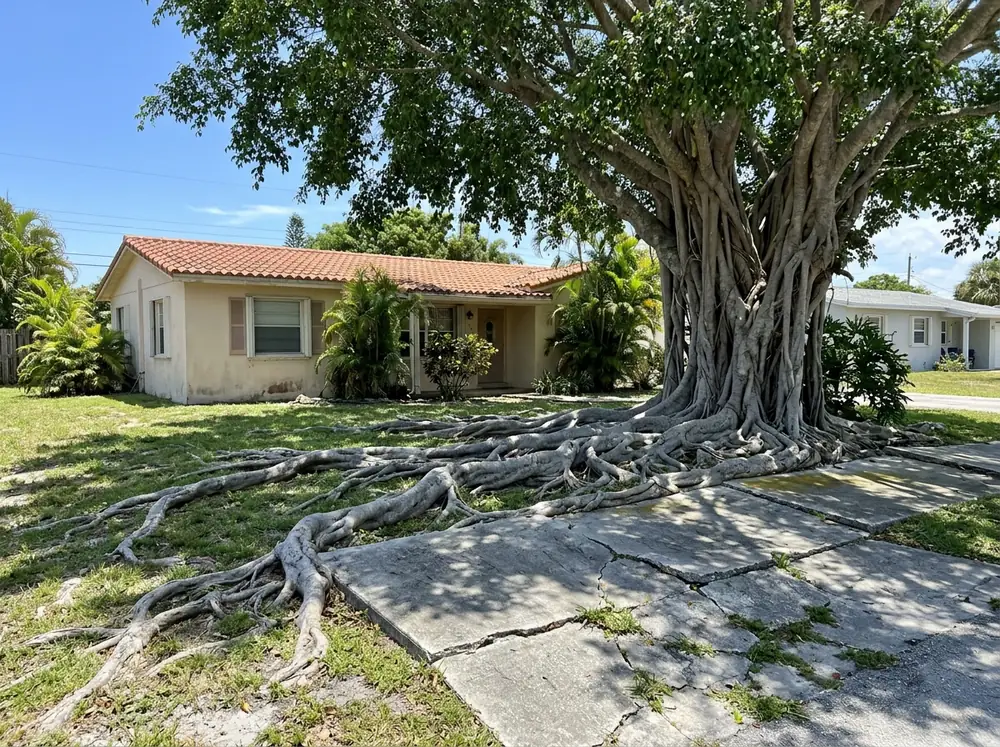
Ficus Roots Under Slabs and Driveways
Weeping fig is the usual suspect. UF/IFAS describes Ficus benjamina as a tree that reaches 60 feet tall and 60 to 100 feet wide, with roots that grow under and lift sidewalks, patios and driveways, and it calls the species far too large for a home lot unless kept as a hedge. If the roots heaving the slab sit inside the 5-times line, cutting them puts the tree at risk. On a ficus that size, taking out the tree can be the cleaner answer, and the City's code leaves most ficus off its specimen-tree list.
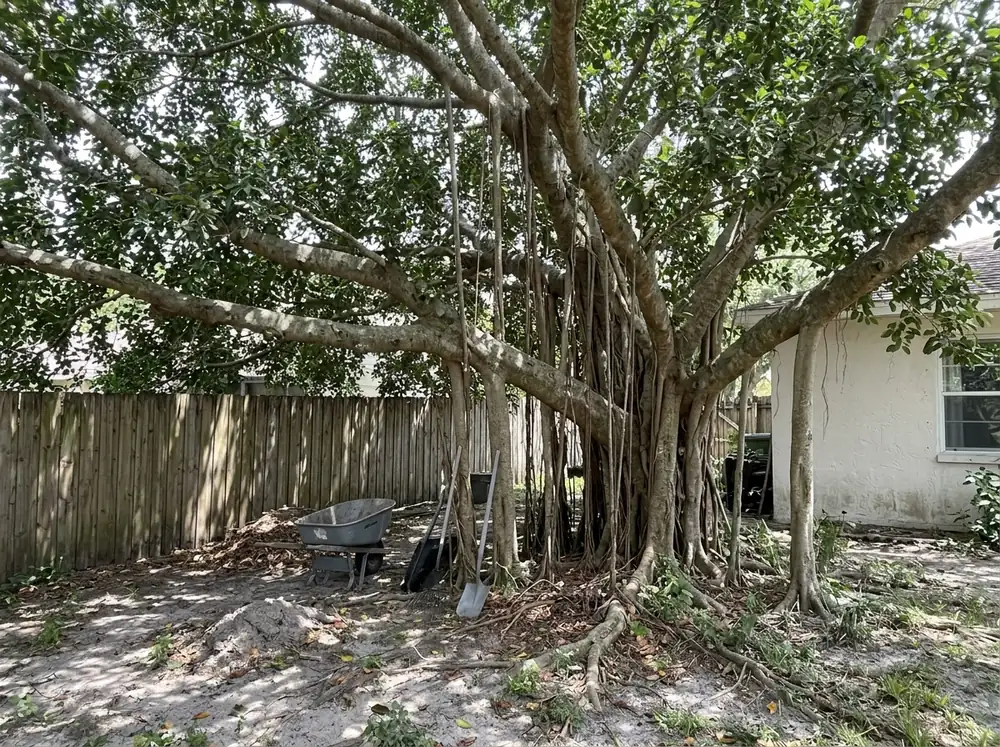
Banyan Aerial and Surface Roots
Weeping fig, listed as weeping banyan in UF/IFAS's hurricane tables, drops aerial roots from its branches. Once they touch the ground they root and grow into sturdy extra trunks, which UF/IFAS says can clog a landscape. For the true banyan, Ficus benghalensis, the UF/IFAS plant directory warns that the root system can damage infrastructure and that seedlings can sprout on fence posts and buildings. Every rooted aerial root is one more trunk to cut and grind.
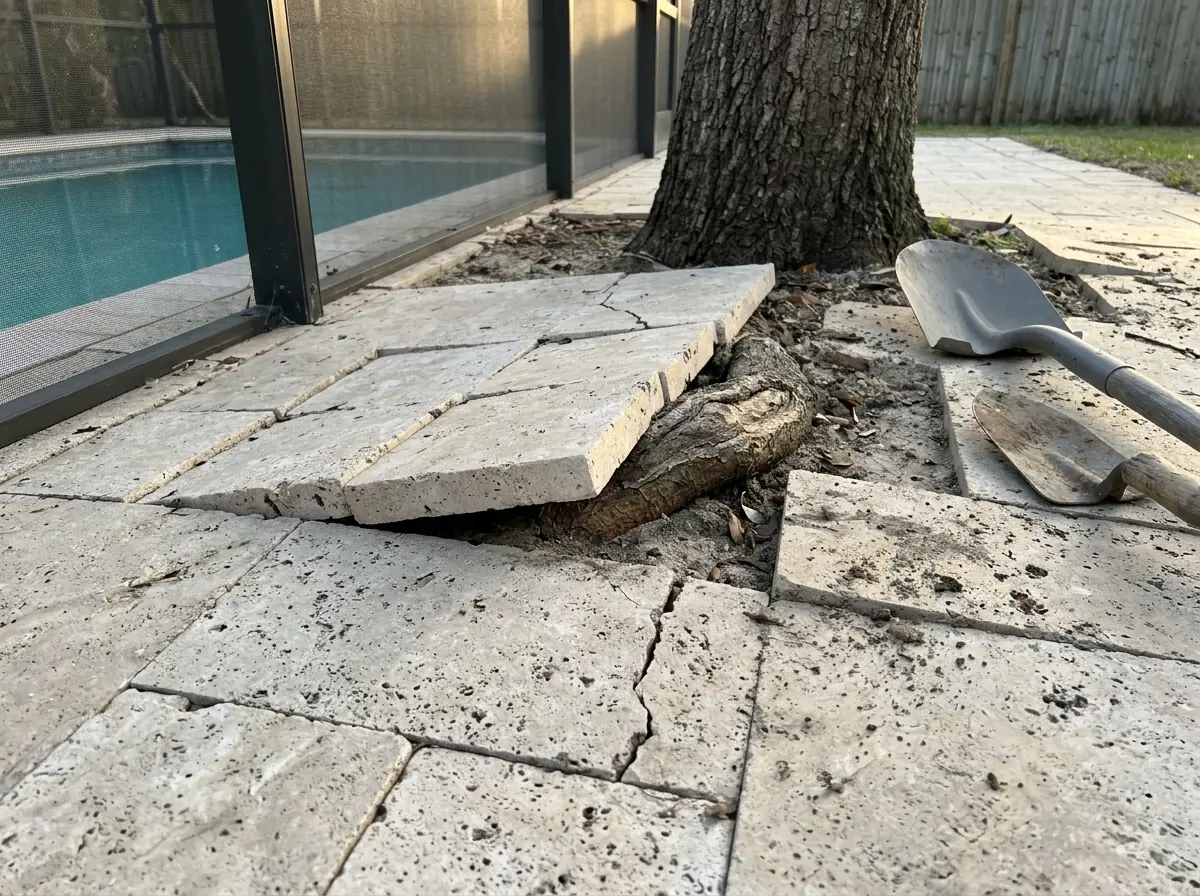
Roots in Pipes and Pool Decks
Roots don't seek out pipes, according to UF/IFAS Extension. They grow where conditions suit them, and a leaking line in wet soil suits them well. On a pool deck, measure how far the lifting roots are from the trunk before cutting. Inside the 5-times line, cutting can leave the tree unstable, a bad trade next to a pool cage. HomeGuide lists repairing root-damaged pipes as a cost on top of the root work.
Root Pruning and Root Barriers
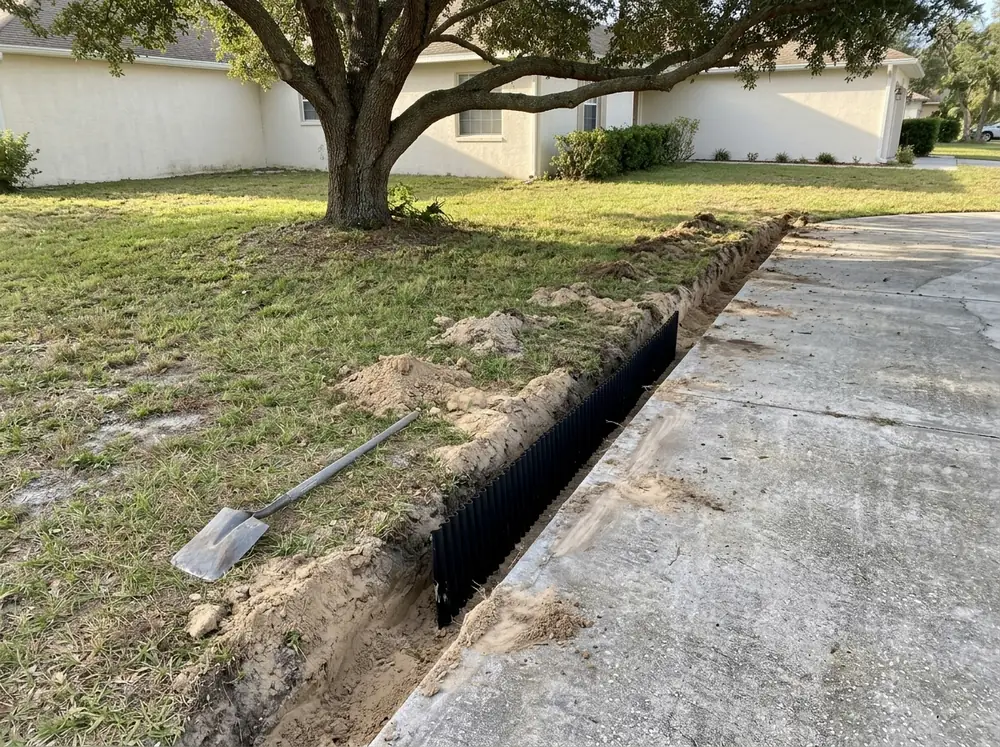
Root pruning cuts roots cleanly at a set line, and a barrier steers the regrowth away from the slab. Angi puts a barrier at about $200 to $300 and says it usually sits around 3 feet deep, either ringing the tree or shielding one side. Any trench means digging, so the call to 811 comes first; stump grinding covers how that works.
Why Pompano Beach homeowners call Pompano Beach Tree Care
- One independent local tree crew per request
- Price, cleanup and haul-away in writing first
- Ask for insurance proof and an ISA arborist
- Free to call; you pay the crew only for work you OK
Cut, Block or Remove: Choosing the Fix for Tree Roots
Most roots sit in the top foot or so of soil, and UF/IFAS Extension says they can run 3 to 4 times past the drip line when nothing stops them. Which fix fits depends on where the damage is and whether the tree is worth keeping.
Keep the tree, cut the roots
Possible when the damage sits outside the 5-times-diameter line. Ask an arborist to mark the line before anyone digs.Keep the tree, add a barrier
Best when new paving or a pool is going in beside a tree you want to save.Remove the tree
When the roots doing the damage are close to the trunk, or the tree is a ficus already too big for the lot. On non-exempt properties, the City can approve removal of a tree that endangers a structure; tree removal covers the permit side.Clear roots after a removal
Grinding takes the stump, not the root spread. Ask for root removal as its own line if you're re-paving or planting.Unsure the tree is stable
Get a tree risk assessment before cutting anything big.
See stump grinding for the stump left after a ficus or banyan comes down.