
Palm Tree Diseases and Disorders Seen in South Florida
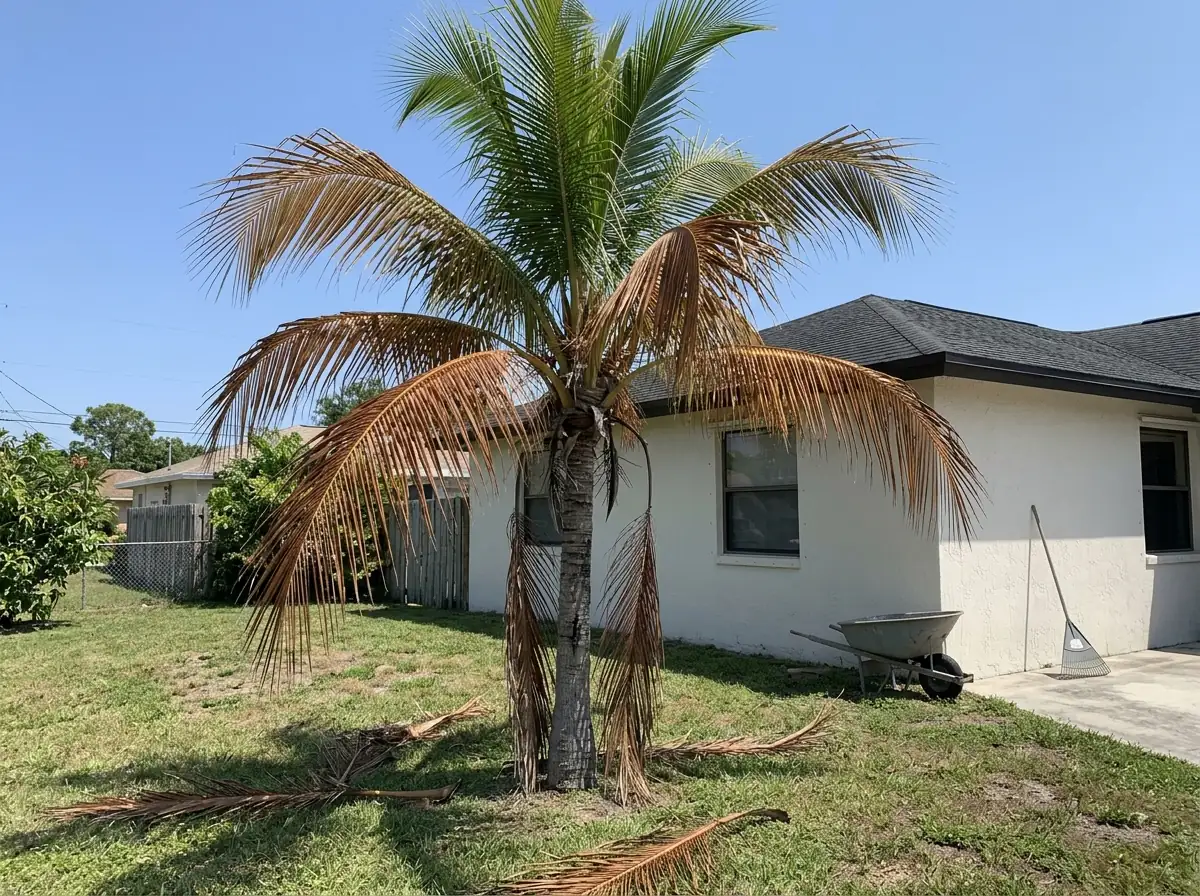
Lethal bronzing
Lethal bronzing is caused by a phytoplasma, a cell-wall-less bacterium that insects carry from palm to palm as they feed. Florida has had it since 2006, Broward County is on the confirmed list, and it has turned up in 21 palm species, coconut and sabal among them. On a palm carrying fruit, the first sign is usually nuts dropping early. Infection to first symptom takes about four to five months, and the spear leaf collapses two to three months after that. A palm that tests positive should be removed right away. Palms near it should be tested, and the clean ones injected every three to four months for at least two years.
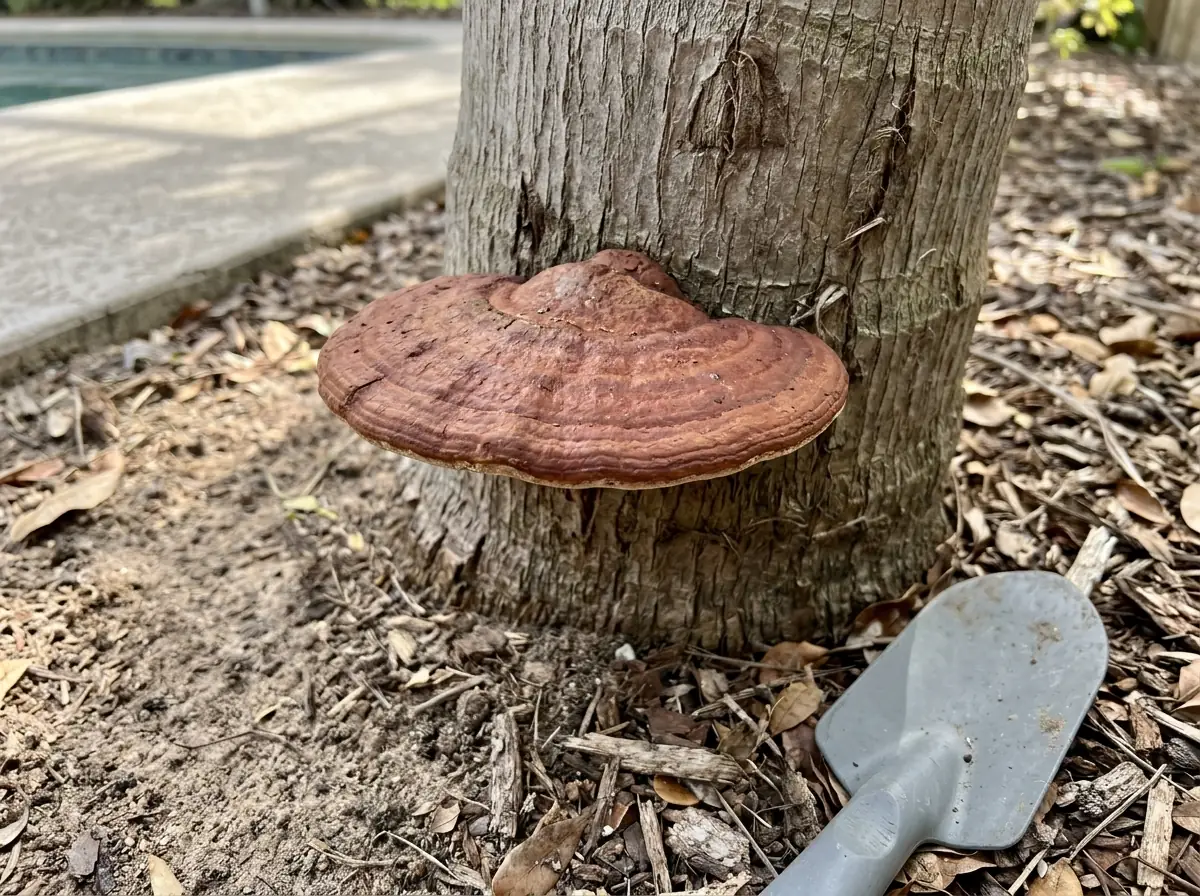
Ganoderma butt rot
Ganoderma is a fungus that rots the base of the trunk, and UF/IFAS treats every palm species as a possible host. The giveaway is a conk, a hard shelf-shaped growth on the lowest four to five feet of trunk, though many palms die before one ever appears. There is no chemical or cultural treatment. Once conks show, the palm should come out as soon as possible, with as much of the stump and roots removed as can be, or the stump ground. A palm in the same hole is risky afterward.
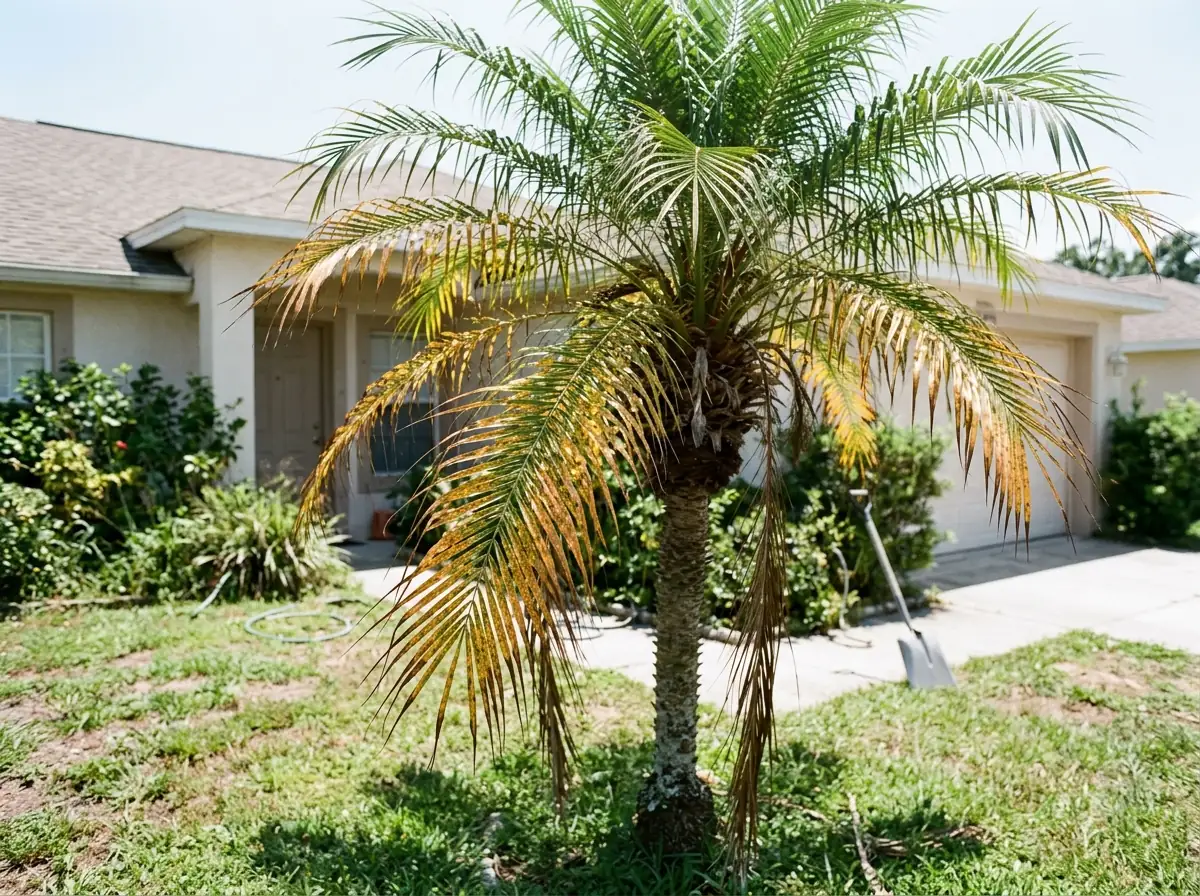
Potassium and manganese deficiency
Not every yellow palm is dying. Potassium deficiency always shows first on the oldest fronds, as translucent yellow-orange spotting and dead leaflet tips. Those fronds look bad but still feed potassium to the new growth, so UF/IFAS advises leaving them on until they're completely dead; how far to trim is covered on the palm tree trimming page. Manganese deficiency hits the newest fronds instead, which come out yellow, streaked and frizzled. It is common where soil pH runs high, and queen and royal palms are especially prone. Manganese sulfate fixes it, reapplied every two to three months, but expect three to six months before the new growth looks better. Left alone, a severe case kills the palm.
Fusarium wilt
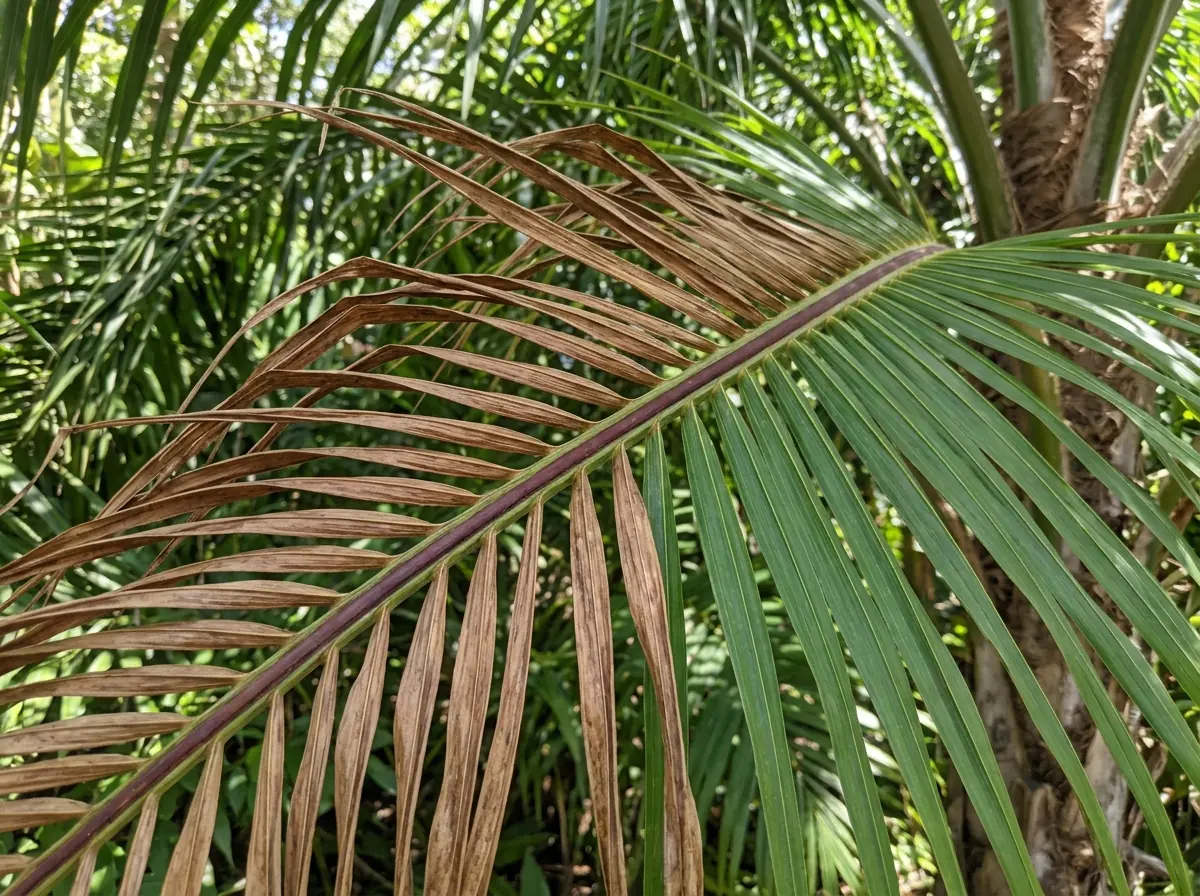
Fusarium wilt is a fungus that mainly kills queen palms and Mexican fan palms. Its tell is "one-sided death": leaflets brown on one side of a frond while the other side stays green, with a reddish-brown stripe down the stem. It starts low in the crown and climbs, and a palm often dies within two to three months. There is no cure, and a lab has to confirm it with a molecular test. Pruning tools may carry it between palms, so an infected palm should only lose dead fronds until it comes down, and the stump should be ground or removed.
Why Pompano Beach homeowners call Pompano Beach Tree Care
- One independent local tree crew per request
- Price, cleanup and haul-away in writing first
- Ask for insurance proof and an ISA arborist
- Free to call; you pay the crew only for work you OK
Treat It, Feed It or Take It Out
Lethal bronzing confirmed
Remove the palm. Test the palms around it and start preventive injections on the clean ones.Conks on the trunk
Remove it with as much root as possible, and plant something other than a palm there.One-sided dead fronds on a queen palm
Get it confirmed and removed quickly, with tools cleaned before they touch another palm.Old fronds spotted yellow-orange
Feed for potassium and leave those fronds on.New fronds frizzled or streaked
Treat for manganese and give it months, not weeks.
If a sick palm leans over the house or a neighbor's yard, a written arborist risk assessment can remove the City permit step; tree risk assessment explains how that works. The removal itself is covered on the palm tree removal page.
What to Ask the Contractor
Was it tested?
Lethal bronzing and Fusarium wilt are confirmed by a lab, not by eye. Ask whether a sample will be sent before you pay for injections or removal.Are the tools disinfected?
UF/IFAS advises soaking blades between palms and changing the disinfectant at least every 10 trees or every 2 hours.Which nearby palms are at risk?
Coconut and sabal for lethal bronzing, queen and Mexican fan for Fusarium wilt.Is the stump on the quote?
Both fungal diseases call for grinding or removing it.Proof of insurance
Ask before anyone climbs or cuts.
See palm tree removal when the diagnosis says the palm can't be saved.