
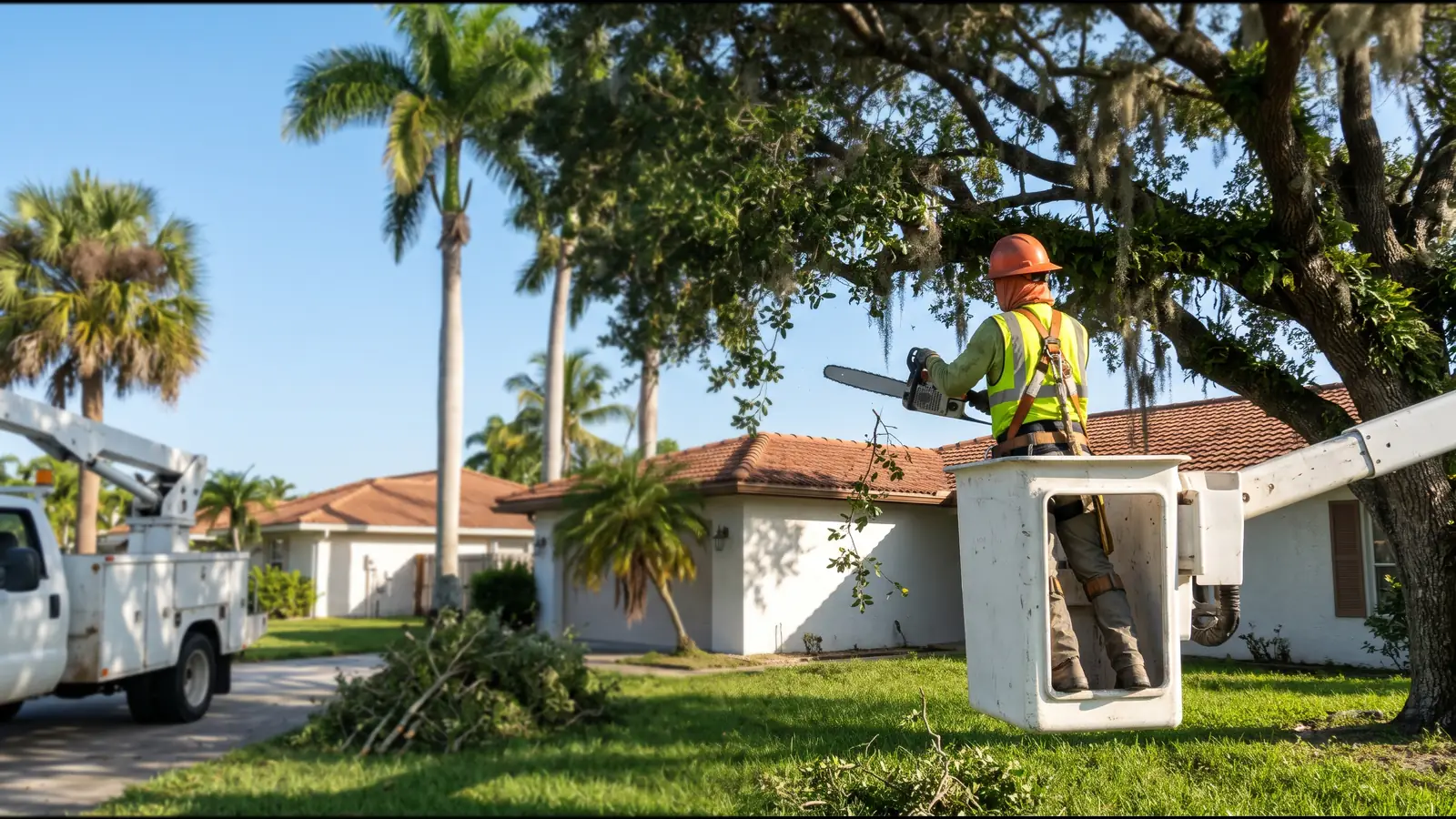
Palm Tree Relocation by Job Type
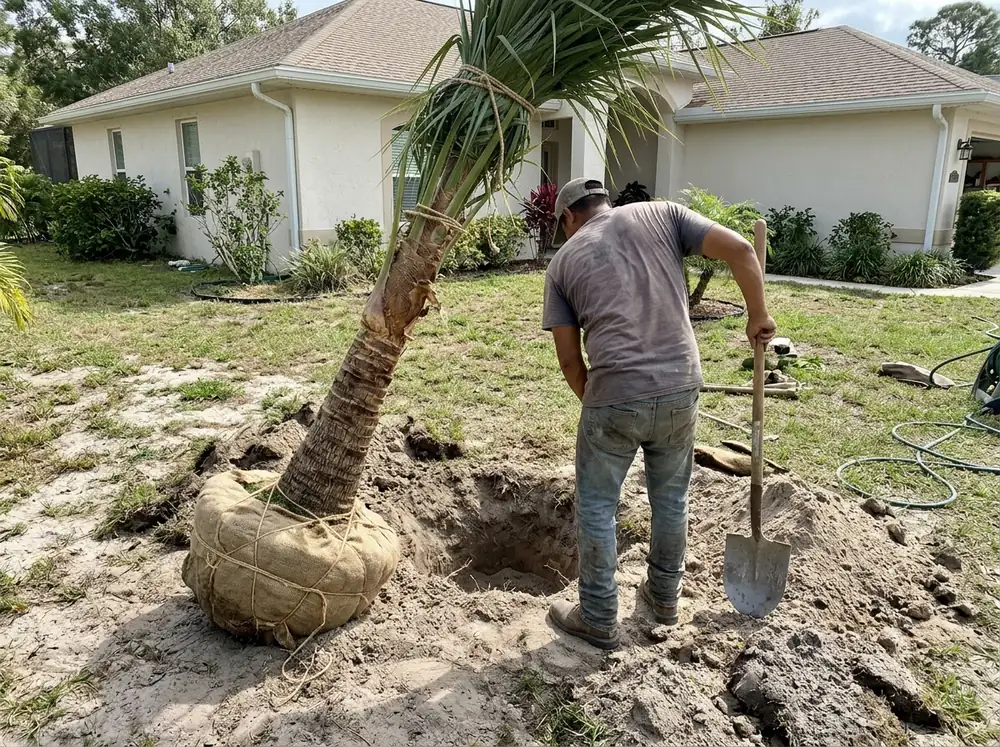
Moving a palm within the same yard
Palms move far more easily than oaks or mahoganies of the same size. Their roots are many thin ones growing from a zone at the base of the trunk, and a moved palm grows new ones from that same zone. Moistening the soil before digging helps the root ball hold together, and in sandy soil the ball gets wrapped in burlap as soon as it's out. The palm goes back in at exactly the depth it grew before. UF/IFAS links deeper planting to chronic iron and manganese deficiency and slow decline, so a contractor who offers to "set it a little deeper for stability" is the wrong one.
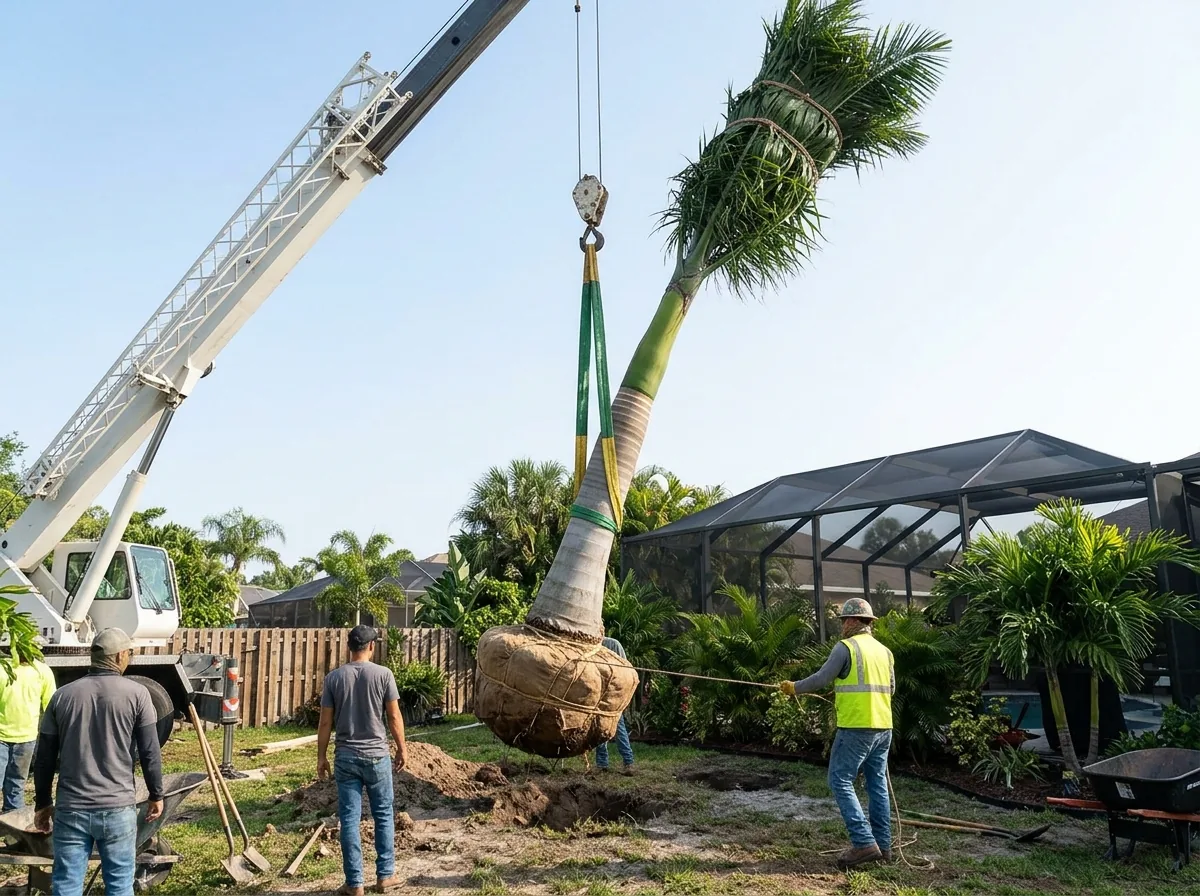
Royal and specimen palms
Royals need a bigger root ball than most palms, at least 1 to 2 feet out from the trunk, and a tall one usually comes out by crane. The palm should hang from a nylon sling. Chains, cables or ropes wrapped straight around the trunk leave wounds that never close and can let in fatal trunk diseases. On properties that need a City Tree Permit, the code also asks for the tree to be root pruned before the move, kept healthy for a year afterward, and replaced within 60 days if it dies. The tree removal page explains which properties need that permit.
Sabal palms
Sabals break the usual rules. Almost every cut root dies back to the trunk, and the palm has to grow a whole new root system, which takes eight months or more. Until then it lives on water stored in its trunk. That is why UF/IFAS research found that stripping all the leaves at digging time raised survival to 95%, against 64% for sabals moved with a third of their leaves on. A bare sabal trunk after a move looks alarming, but it is the method that works.
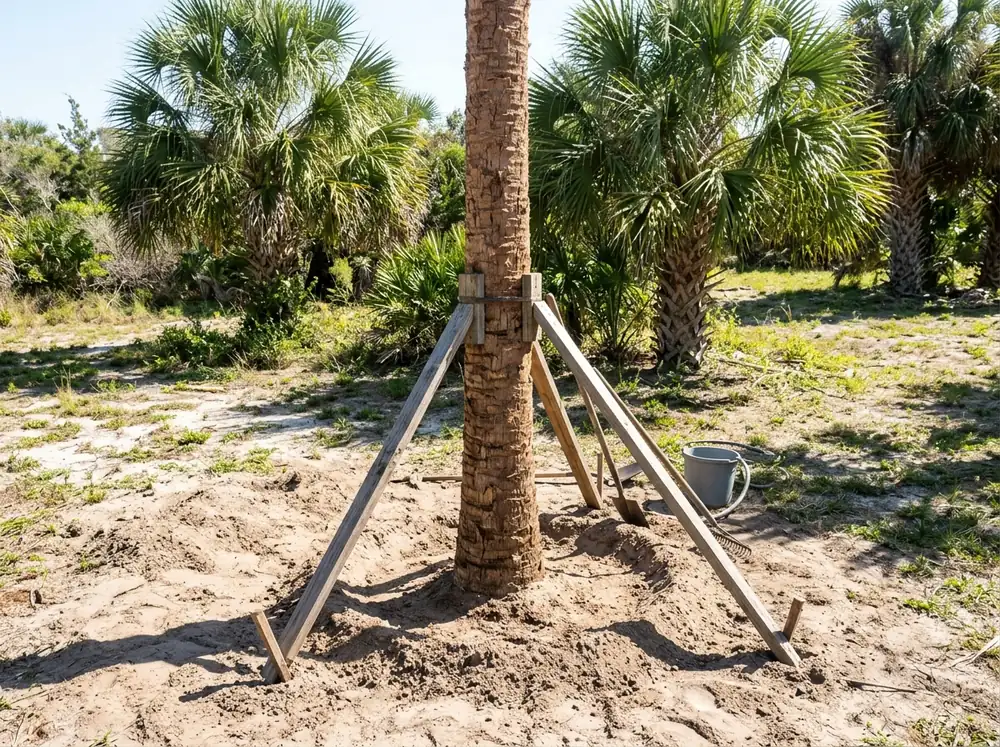
Bracing, watering and aftercare
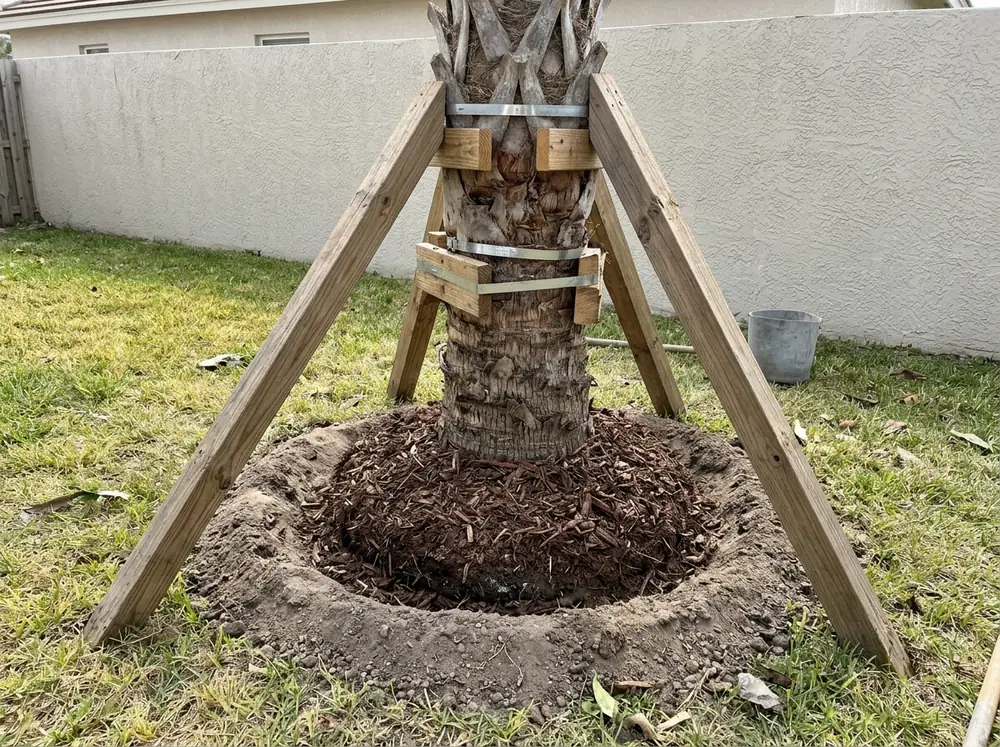
A tall moved palm needs bracing. The method UF/IFAS recommends straps short lengths of 2 x 4 to the trunk and nails the braces into those, never into the trunk itself, and leaves them on for about a year. Tied fronds should be untied once the palm is planted, because bundled leaves invite disease. A low ring of soil around the root ball holds water where the roots are; keep that soil evenly moist but never soggy for the first four to six months.
Why Pompano Beach homeowners call Pompano Beach Tree Care
- One independent local tree crew per request
- Price, cleanup and haul-away in writing first
- Ask for insurance proof and an ISA arborist
- Free to call; you pay the crew only for work you OK
Moving a Palm vs Buying a New One
A move only makes sense when the palm is worth more than a replacement. HomeGuide prices a planted palm at about $200 to $400 up to 4 feet and $1,000 to $3,000 for a mature one, while moving a tall palm by crane can run to $5,000. A mature royal you can't easily replace is a good candidate. A short sabal, a queen in poor shape or any palm that has to come out because it's sick is not; taking those out and replanting costs less.
How a Palm Relocation Runs
- 1
Choose the new spot
Pick a well-drained place. UF/IFAS warns against planting palms where the water table is high unless the area is built up into a mound. Have the underground lines marked first; stump grinding covers the call-before-you-dig rule.
- 2
Prepare the crown
Most palms lose one half to two thirds of their oldest fronds before digging, and the rest are tied together for the move. Sabals lose all of them.
- 3
Dig, wrap and lift
The root ball is cut to size for the species, wrapped if the soil is sandy, and lifted by sling. On a truck, the trunk needs support along its full length so the crown and bud don't crack.
- 4
Plant, water and brace
The palm goes in at its old depth, sand is washed into every gap around the ball, the fronds are untied and the braces go on.
See palm tree removal when moving the palm costs more than it's worth.