
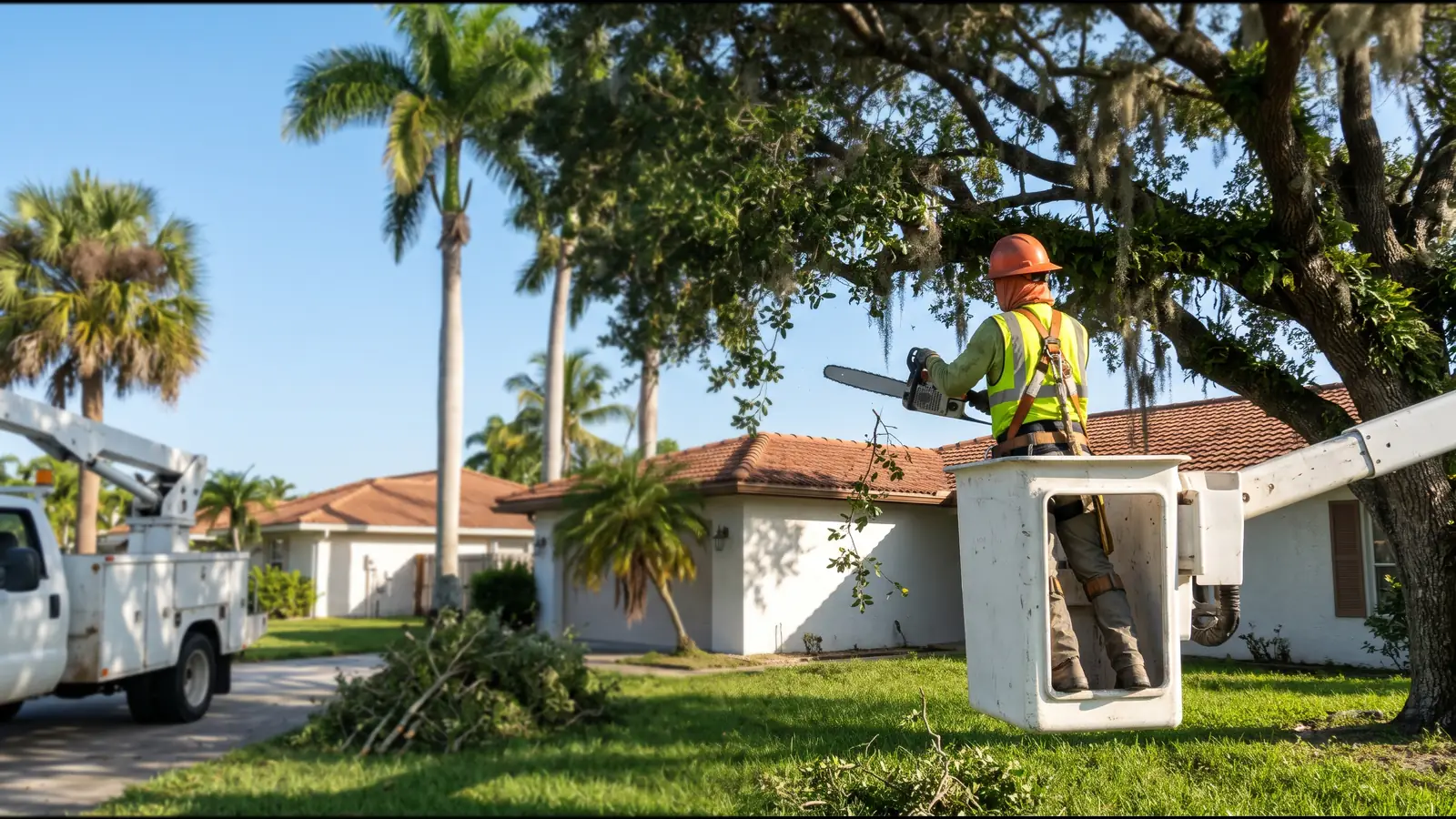
Mangrove Trimming by Species and Shoreline
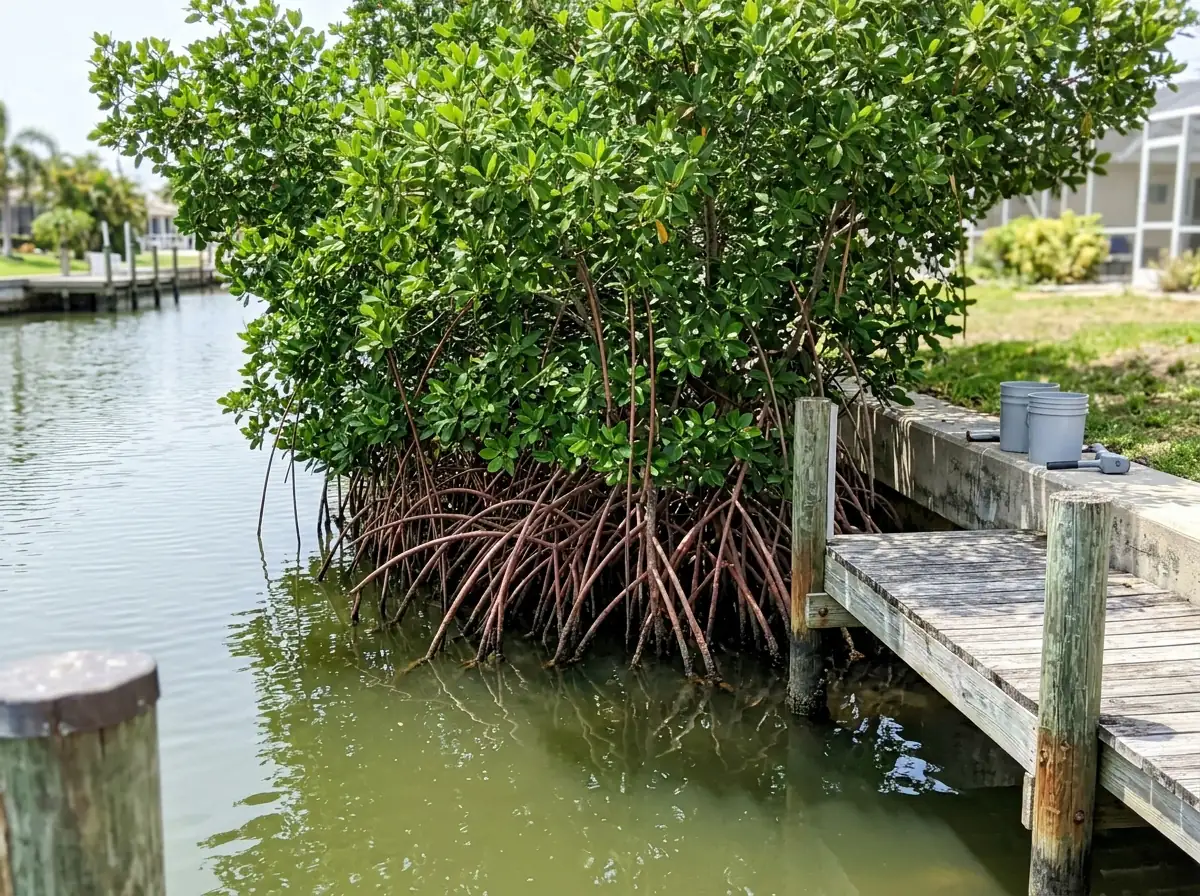
Red mangroves along seawalls
Red mangroves are the ones with arching, reddish prop roots, and they usually grow closest to the water. On a canal lot they can push against the seawall and spread out over the dock. FDEP treats mangroves growing into a seawall, or inside a dock's footprint, as a case that can be trimmed or even altered under a maintenance exemption. Send the permitting office photos first. If a professional trimmer is cutting red mangroves under the trimmer exemption for the first time, the law requires written notice at least 10 days before work starts.
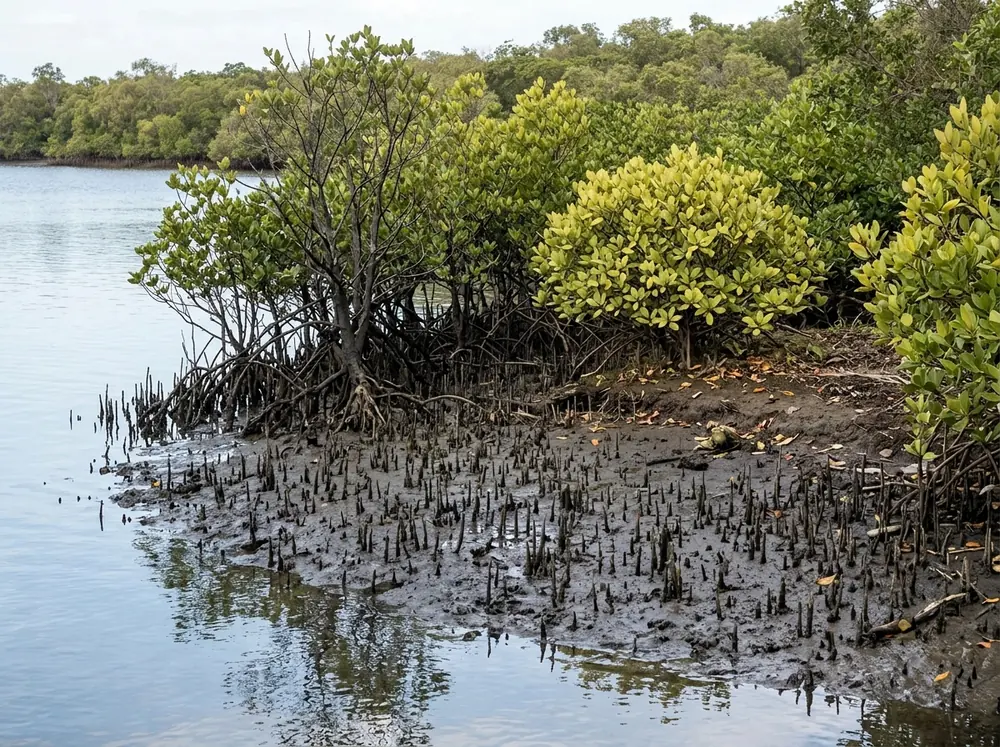
Black and white mangroves
Black mangroves grow a little higher up the shore and send up finger-like breathing roots through the mud around the trunk. White mangroves sit higher still. They have no visible aerial roots, and you tell them by their leaves: oval, up to 3 inches long, with two small glands where the leaf meets the stem. The law covers all three species the same way. None of the trimming exemptions allow removal, so taking a mangrove out means an individual permit and, often, mitigation.
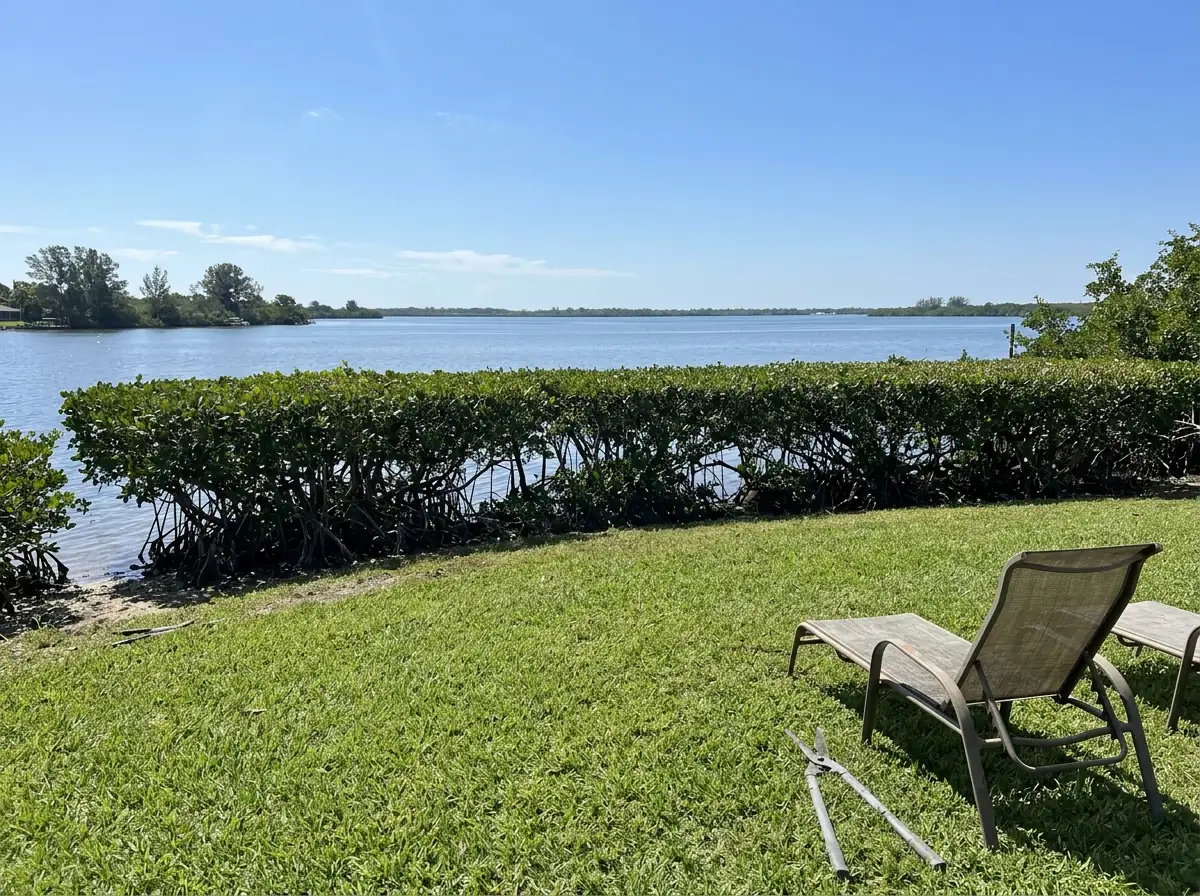
View trimming on waterfront lots
The Act says outright that it means to give waterfront owners their riparian right of view, and its trimming exemptions are how it does that. The conditions are specific. The mangroves have to be a riparian fringe, no more than 50 feet deep from the most landward trunk to the most waterward one. Heights are measured from the substrate, where the trunk meets the ground, even under water. On a shoreline longer than 150 feet, no more than 65% of the mangroves may be trimmed under an exemption. No herbicide or chemical may be used to strip leaves.
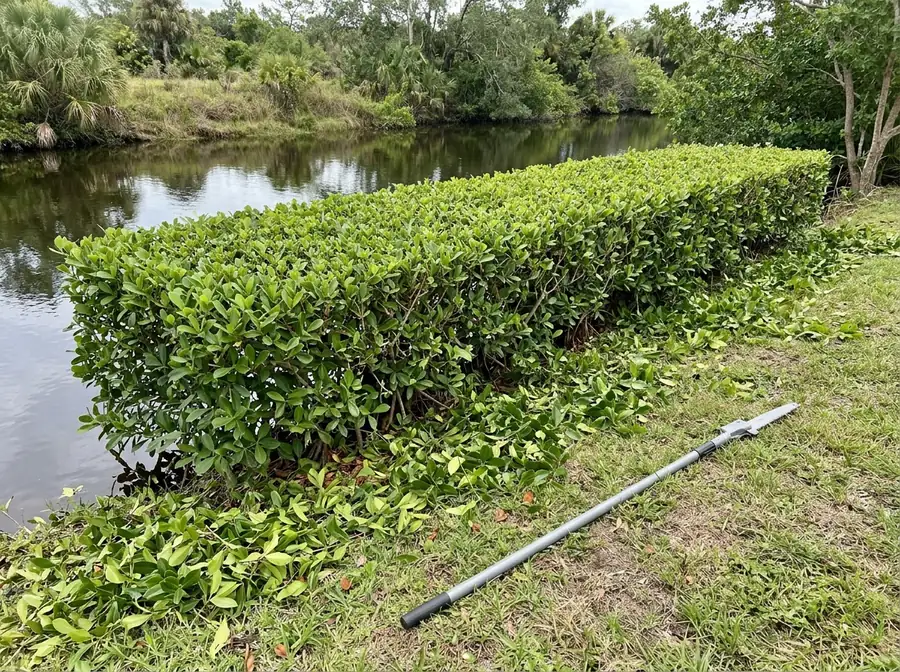
Keeping hedged mangroves in shape
Mangroves already trimmed under an exemption or permit can be kept at that height and shape, and historically established maintenance trimming is grandfathered by law. The proof is an affidavit from someone who knows the old configuration, or photographs. Take dated photos after every trim. Cutting below 6 feet, even on a hedge that has been kept low before, takes an individual permit unless it matches a height already established.
Why Pompano Beach homeowners call Pompano Beach Tree Care
- One independent local tree crew per request
- Price, cleanup and haul-away in writing first
- Ask for insurance proof and an ISA arborist
- Free to call; you pay the crew only for work you OK
Mangrove Trimming Permits in Broward County
FDEP has handed its mangrove authority to a short list of local governments, and Broward County is one of them. The county's Environmental Permitting Division licenses mangrove trimming and alteration through its Aquatic and Wetland Resources program (954-519-1454). A delegated county issues the permits in place of the state, but the law bars it from restricting the fringe exemptions in any way. Trimming that fits an exemption needs no permit. Anything outside one needs a permit, and where the fringe runs deeper than 50 feet, FDEP says the owner needs a professional mangrove trimmer as well.
Before the First Cut
The owner shares the risk
State law presumes any violation happened with the owner's knowledge and consent.Overcutting means replanting
If 5% or more of the trimmed mangroves end up below 6 feet, defoliated or destroyed, the area must be restored with new mangroves to equal canopy within 5 years. Owner and trimmer are jointly liable.Repeat violations cost per tree
Second and later violations add up to $100 for each mangrove illegally trimmed, $250 for each one altered, and a separate penalty of up to $250 per mangrove on the trimmer.Ask who qualifies
ISA Certified Arborists, certified wetland scientists, environmental professionals and ecologists count as professional mangrove trimmers under the Act. Ask which one will be on site.Measure first
Ask the contractor to measure the current height from the substrate and note the shoreline length before quoting.
See sea grape trimming for coastal plants on the beach side of the property.