Invasive Trees Common in Pompano Beach Yards
Brazilian pepper
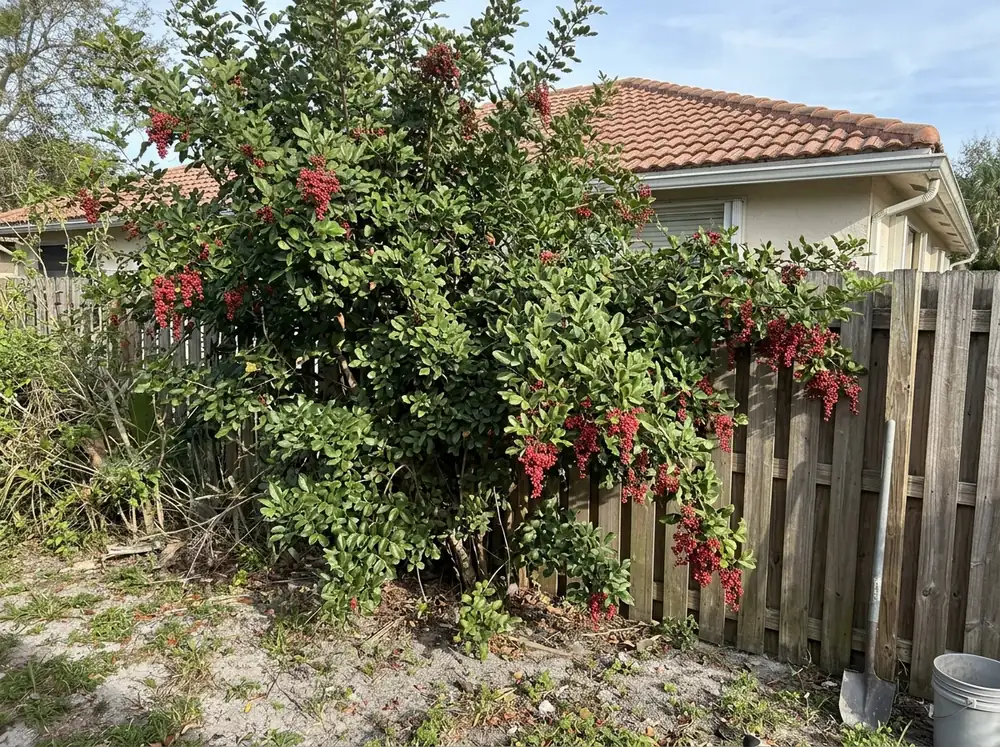
Brazilian pepper is the one most yards have. UF/IFAS describes a shrub or small tree up to about 33 feet, with a short trunk lost inside tangled branches, and it turns up along canals and roadsides as well as in back corners. It belongs to the cashew family, and its sap can cause a rash in sensitive people, so crews should wear sleeves and gloves. Cutting alone isn't the whole job:
- Cut-stump treatment. Trunk cut near the ground, then glyphosate or triclopyr on the ring of living tissue just inside the bark within 5 minutes.
- Product strength. UF/IFAS calls for glyphosate at 41% active ingredient or higher; ready-to-use sprays won't work.
- Timing. Flowers September to November, ripe fruit by December. Cut outside fruiting season when you can.
Australian pine
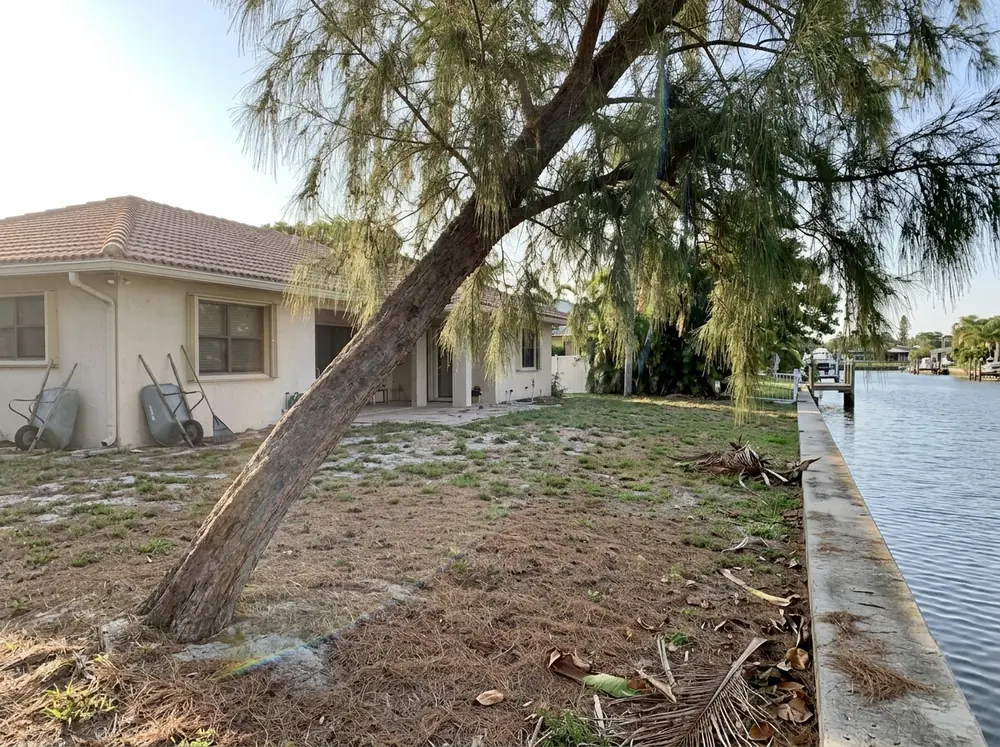
Australian pine isn't a true pine; the name covers several Casuarina species. The City lists every Casuarina species as invasive, and two of them are on the state's prohibited list. It's also a storm risk: UF/IFAS hurricane studies put Australian pine in the lowest wind-resistance group, with poor survival in South Florida storms. A tall one near a house or seawall may need rigging or a crane, so it's priced like a large removal, not like brush.
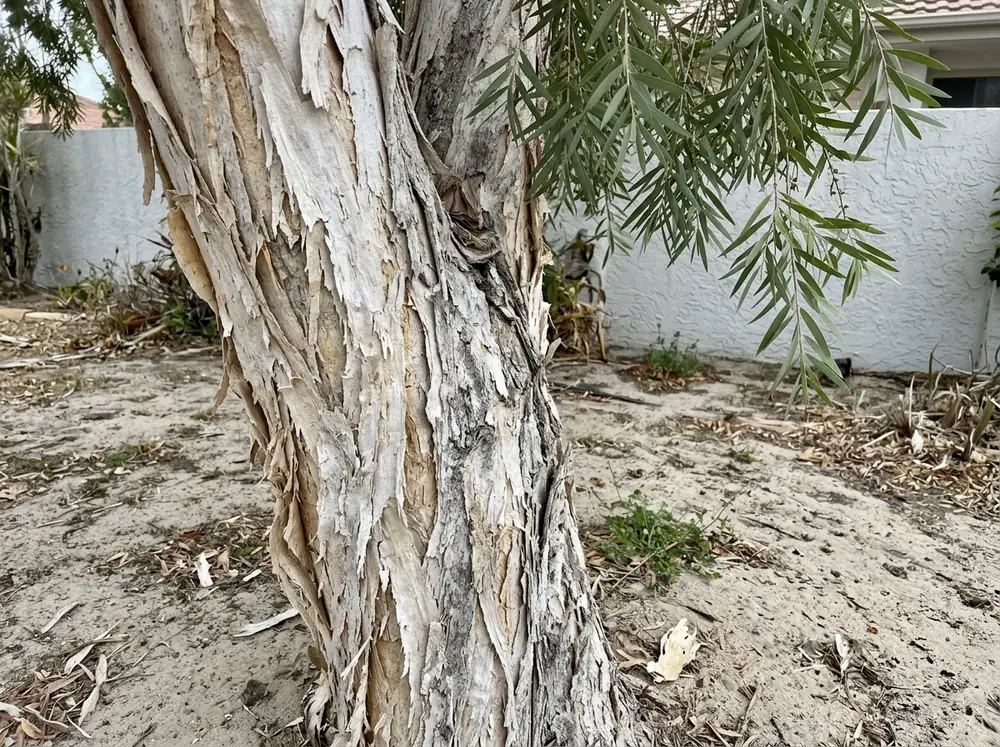
Melaleuca
Melaleuca, also listed as punktree or cajeput, is the paperbark tree. It's on the state statute, the noxious weed rule, the Florida Invasive Species Council's Category I list and the City's invasive list. UF/IFAS groups it with Australian pine among the trees that did worst in South Florida hurricanes. Taking out a mature one is ordinary removal work, with the same stump question as Brazilian pepper: grind it out or treat it so it doesn't resprout.
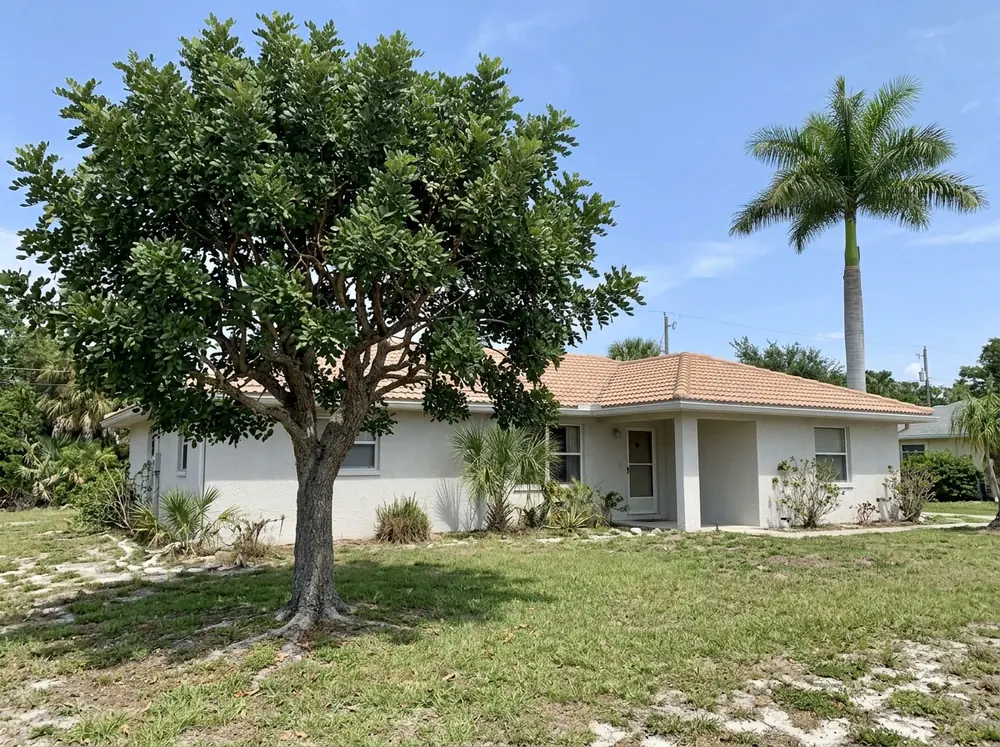
Carrotwood and earleaf acacia
Neither is on the state's noxious weed rule, but both are Category I on the Florida Invasive Species Council list, and both are named in Pompano Beach's invasive tree list. That matters for permits more than for the work itself: on a property that needs a Tree Permit, the City's invasive list is what makes these two removable as invasives. If you aren't sure what you have, a leaf photo sent with your request lets the contractor check before the visit.
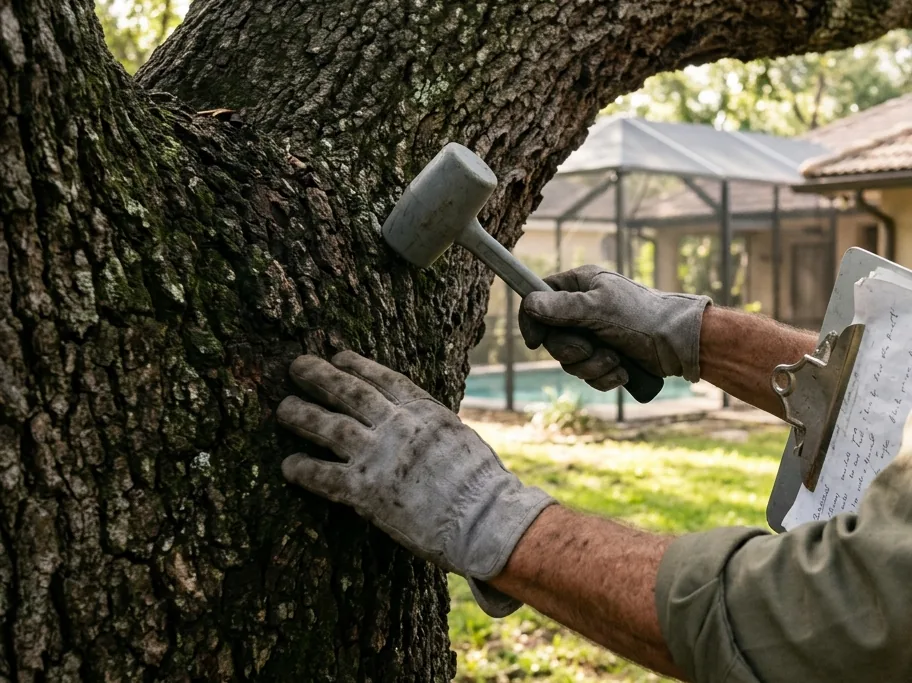
Why Pompano Beach homeowners call Pompano Beach Tree Care
- One independent local tree crew per request
- Price, cleanup and haul-away in writing first
- Ask for insurance proof and an ISA arborist
- Free to call; you pay the crew only for work you OK
Florida and Pompano Beach Rules on Invasive Trees
Three layers of rules apply, and they don't all name the same trees:
State statute
Fla. Stat. 369.251 bars selling, transporting, collecting, cultivating or possessing melaleuca, Brazilian pepper and two Australian pine species without a permit from the Florida Department of Agriculture and Consumer Services. Violations are a second-degree misdemeanor, fine only. Plants spread by nature, and wood hauled off for control and disposal, are exempt.State noxious weed rule
Rule 5B-57.007 lists Brazilian pepper, melaleuca and the Casuarina species.City invasive list
The zoning code adds earleaf acacia, carrotwood, Norfolk Island pine, schefflera and bishopwood to the same three.City removal finding
An invasive tree is one of the code's grounds for approving a Tree Permit, provided the removal is complete. On properties that need a permit, the code's replacement-tree section still applies, so ask the City what it expects.
Stumps, Sprouts and Haul-Away
Plan the stump before the saw starts. One option is grinding, which takes the stump below grade and needs a Sunshine 811 call before digging. The other is the cut-stump herbicide treatment above, which leaves the stump in place and lets the contractor work close to slabs, pool decks and fences. UF/IFAS also advises checking a treated area for seedlings on a regular basis, so pull them while they're small.
See land clearing when the invasives cover a whole lot and the ground needs clearing too.