
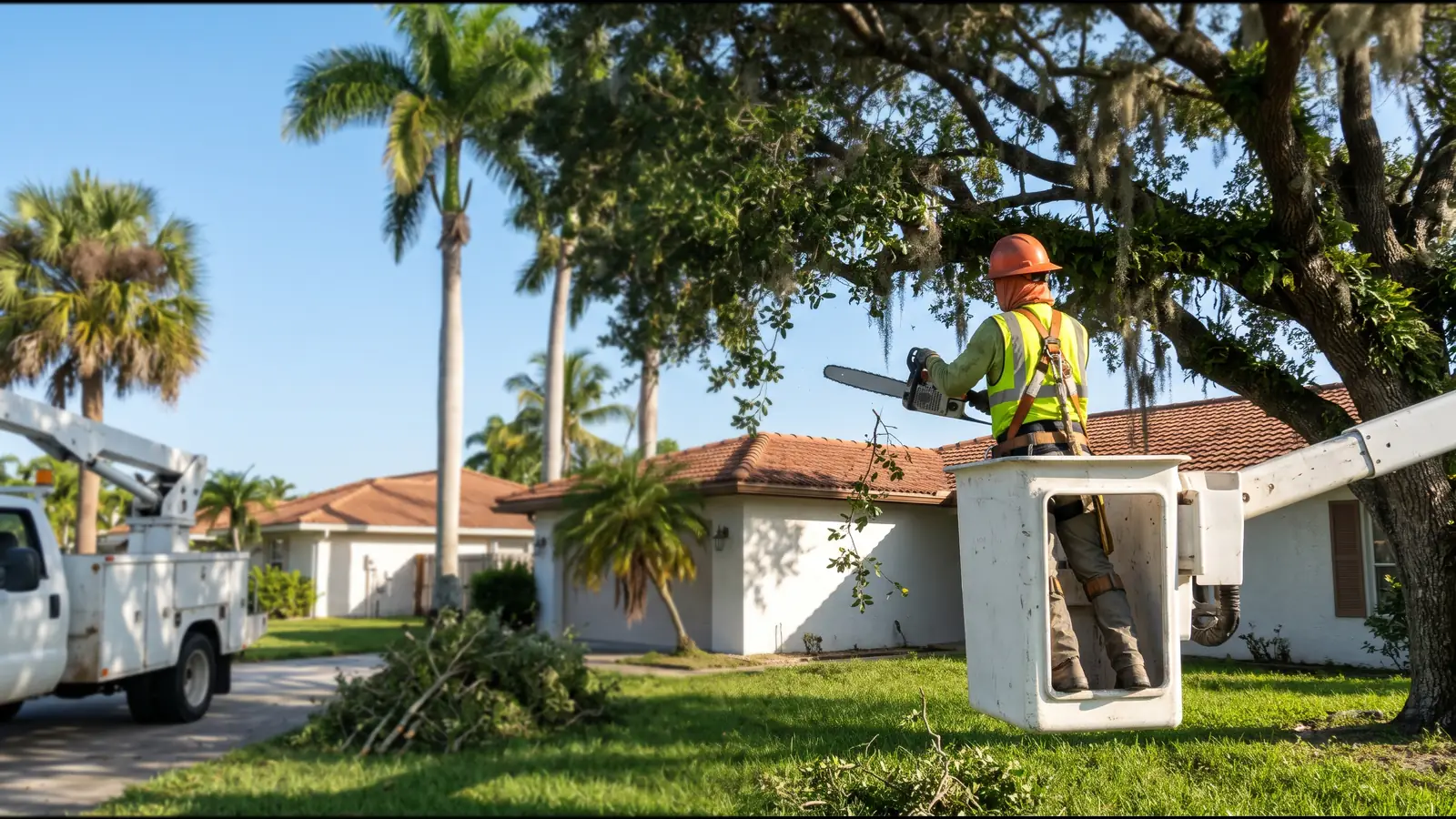
Hurricane Tree Trimming Work Before the Season
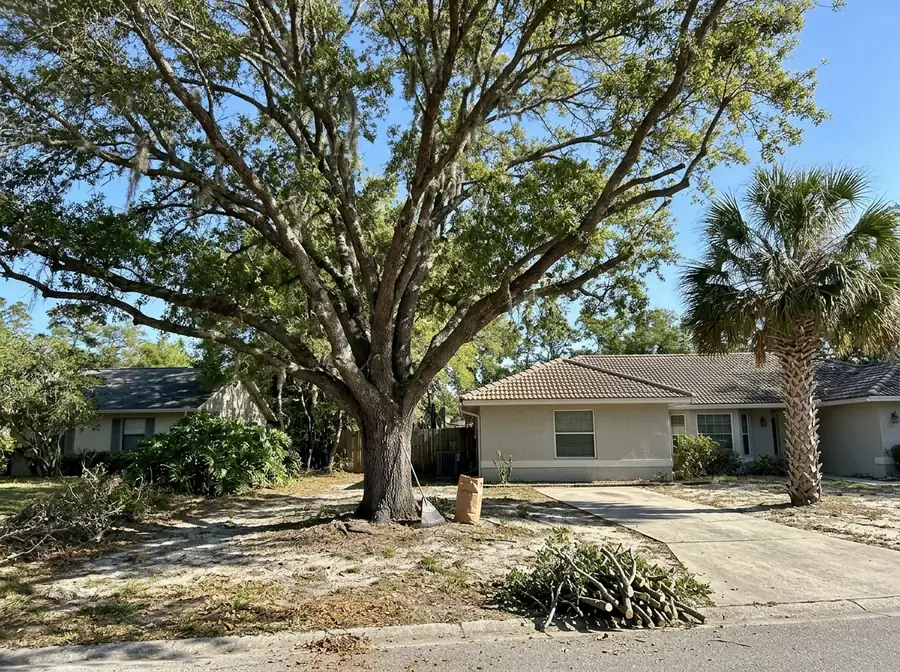
Crown Thinning
UF/IFAS describes the arborist thinning the outer edges of the canopy, not the interior, so the inner branches stay where they are. Cutting branches back to bare stubs is out too; UF/IFAS warns against heading back, and the City treats topping as tree abuse, covered on tree trimming.
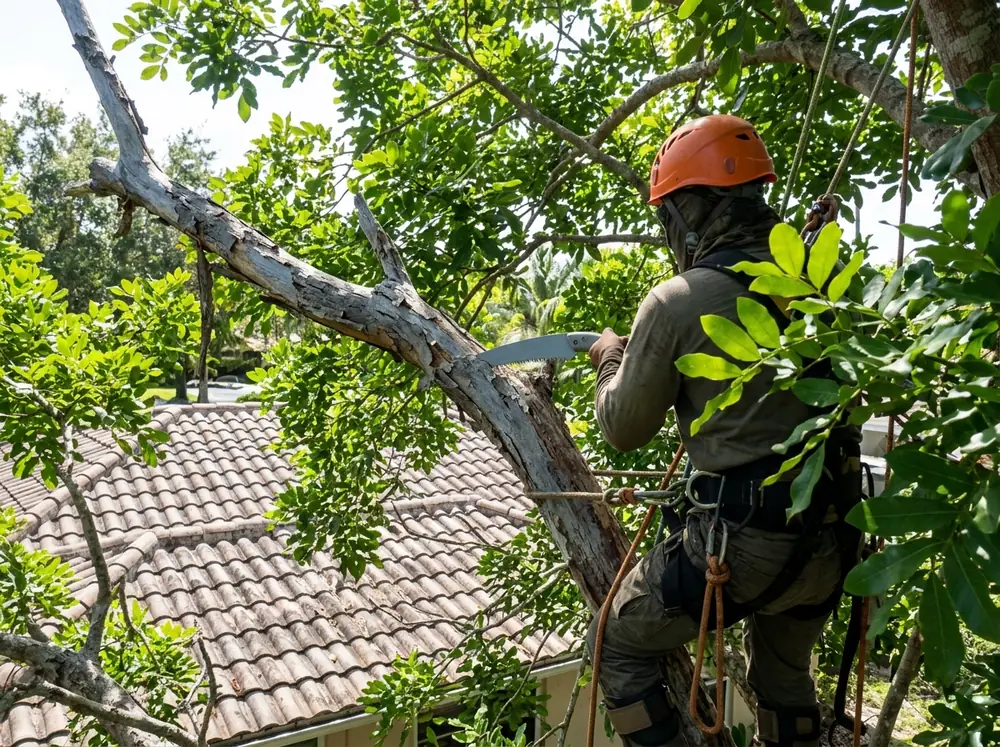
Deadwood and Weak Limb Removal
Dead wood comes out first in every storm-prep job. UF/IFAS gives the order: dead, diseased and damaged wood, then water sprouts, then crossing branches, then a well-spaced framework of branches, and last any shortening to balance the crown. Branches with cracks get removed or cut back. A hanging limb is already failing and can drop on a calm afternoon, so it shouldn't wait for spring.
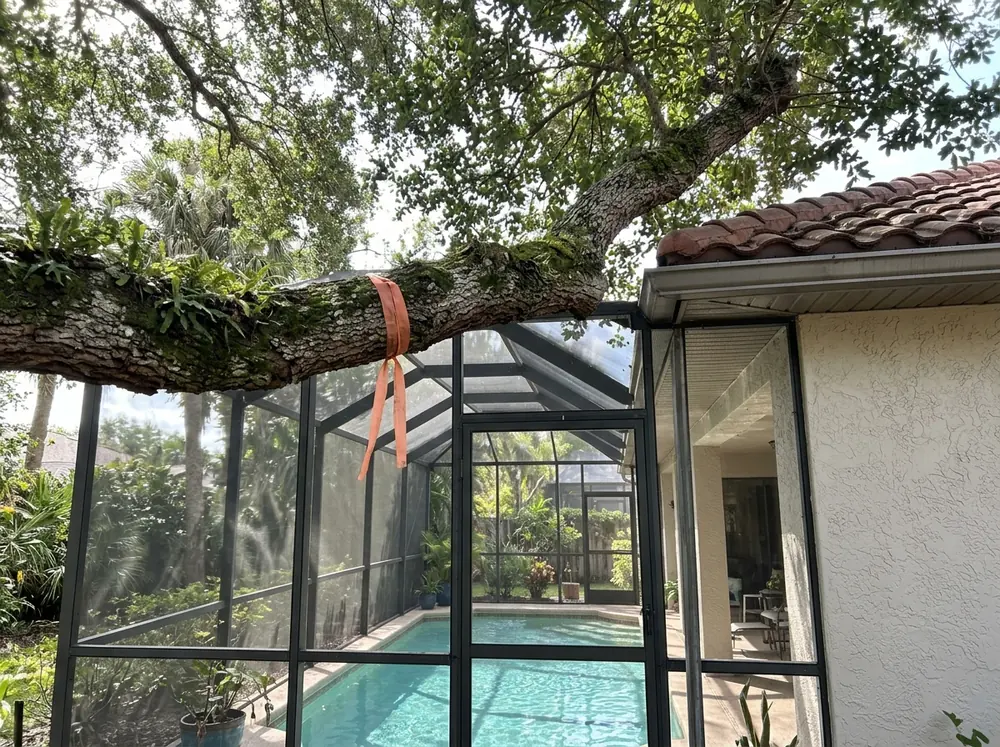
Limbs Over Roofs and Pool Cages
These are the limbs most homeowners call about. UF/IFAS says low branches close to the roof should be removed or shortened, overly long branches shortened, and a branch as thick as the trunk it grows from shortened. Shortening a limb to a side branch keeps the tree's shape and takes weight off the end that would land on the screen.
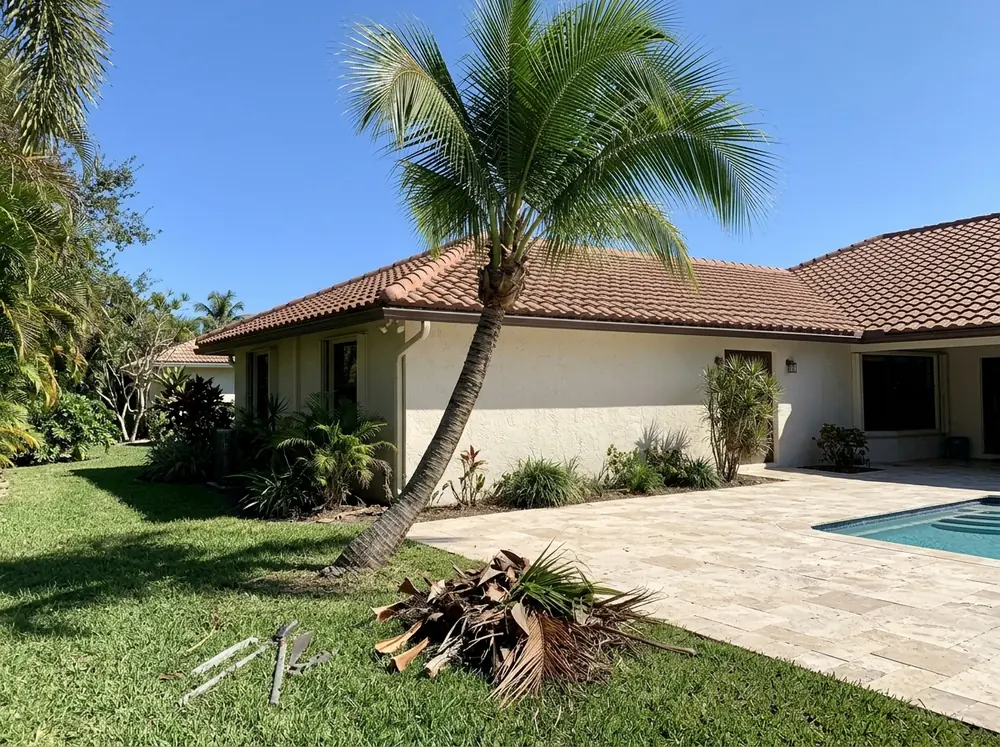
Palms Before a Storm (No "Hurricane Cut")
Take off the brown fronds before the season so they don't become missiles, and on coconut palms harvest any nuts of size, which UF/IFAS lists as part of storm prep. Leave the green crown alone. Cutting a palm down to a few upright fronds weakens it, and in Pompano Beach it breaks the City's tree abuse rule; palm tree trimming explains the 9 o'clock to 3 o'clock line.
Why Pompano Beach homeowners call Pompano Beach Tree Care
- One independent local tree crew per request
- Price, cleanup and haul-away in writing first
- Ask for insurance proof and an ISA arborist
- Free to call; you pay the crew only for work you OK
When to Book Hurricane Tree Trimming in Pompano Beach
The season opens June 1 and closes November 30, and the National Hurricane Center puts the peak at September 10, with most activity from mid-August to mid-October. That leaves the months before June as the practical window, and by summer demand climbs and so do prices.
Book early in the year
Cost guides see tree work running 10% to 20% higher in summer and fall.Don't cut once a storm is coming
FPL tells customers not to wait for a hurricane to trim, because the debris can turn dangerous in storm winds.Plan the pile
The City's weekly bulk pickup takes branches up to 6 feet long; yard debris removal covers what it won't take.Check big trees every couple of years
UF/IFAS suggests a professional evaluation about every two years, which fits a spring visit.
Which Trees Need Storm Pruning Most
UF/IFAS ranked South Florida trees by how they held up in hurricanes. At the bottom were Australian pine, melaleuca, weeping fig (Ficus benjamina), queen palm and Washington fan palm. Black olive, laurel oak and royal poinciana sat in the medium-low group. Those are the trees where pruning, or replacing, pays off first.
Dense, top-heavy crowns
A high center of gravity and a thick canopy catch the most wind.Two or more trunks
A V-shaped fork can tear; see tree cabling and bracing.Very old, large trees
UF/IFAS groups them with new plantings as the most storm-prone, since old trees often carry decay.Shallow roots
UF/IFAS names Indian laurel fig (Ficus microcarpa) and Australian pine among species that blow over rather than break.
See tree risk assessment if you're not sure a big tree should stay through another season.