Palm Tree Removal by Species and Condition
Royal palm takedowns
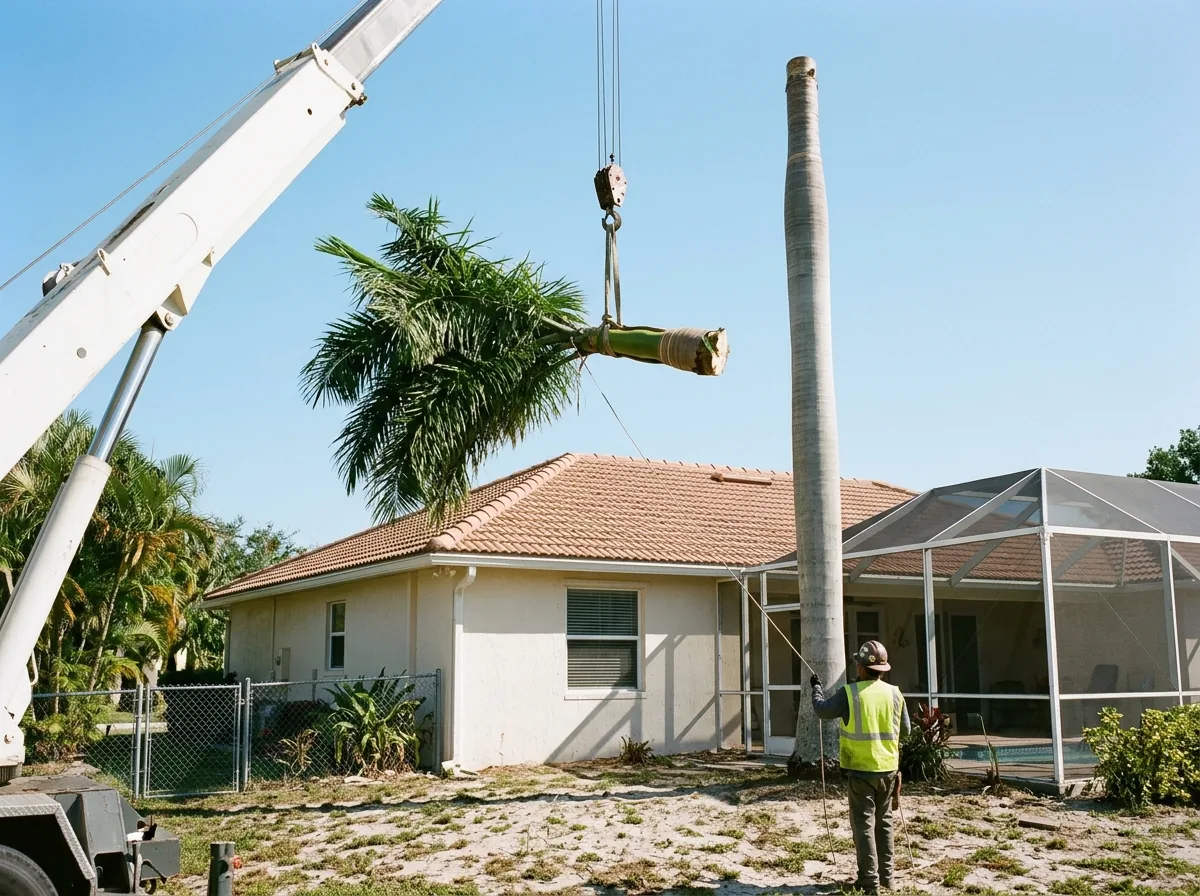
With a royal, height is most of what you pay for. Royals shed their own old fronds about once a month, so people rarely remove a royal for the mess. The usual reasons are a trunk too close to the house, a palm crowding a pool deck, or a crown hanging over a neighbor's roof. UF/IFAS rates royal palm medium-high for wind resistance, so a healthy one isn't a storm hazard just because it is tall. Where there's no clear drop zone, the crown and trunk come out in sections, sometimes by crane; crane tree removal covers when that is worth the cost.
Coconut palm removal
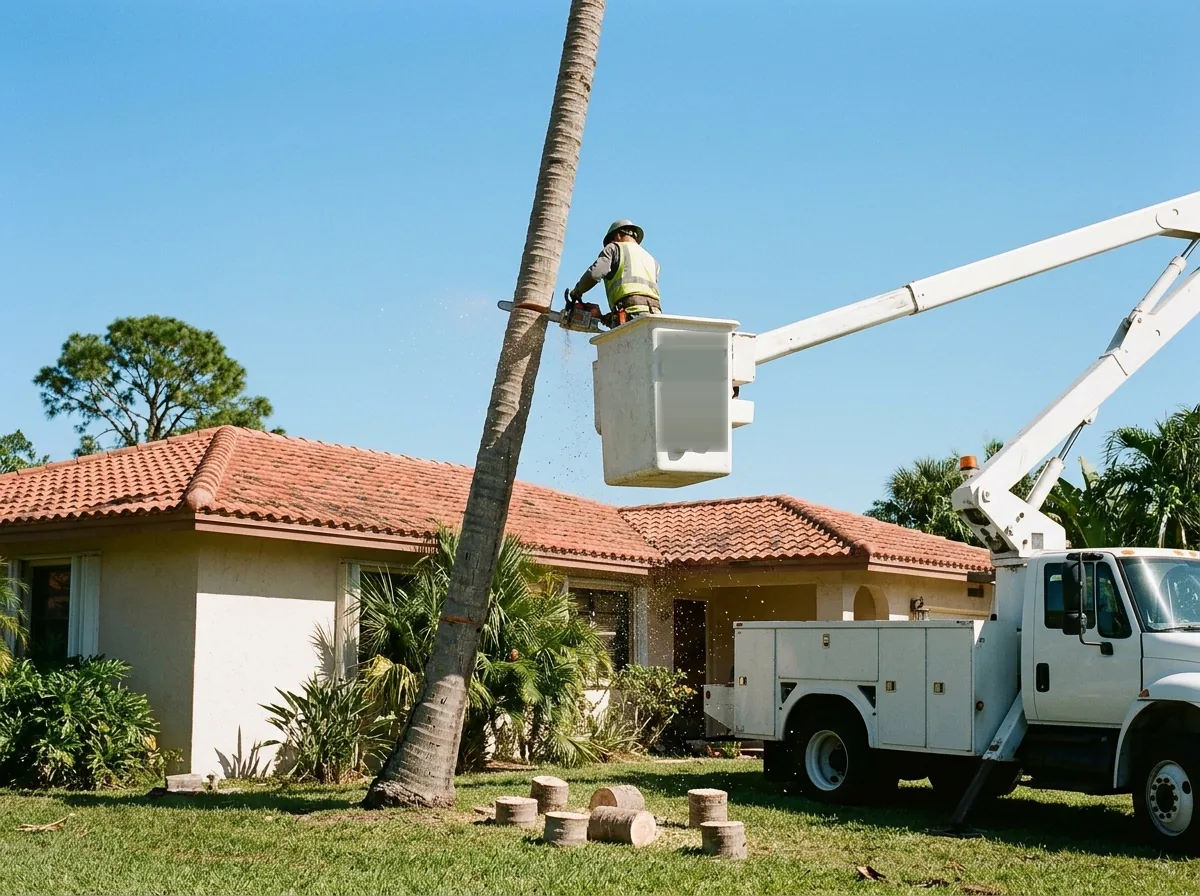
Coconut palms often lean out over a pool or patio, so the crown can't simply be dropped. A climber or bucket lift takes the nuts and fronds first, then lowers the trunk in short lengths. Two lethal diseases, lethal yellowing and lethal bronzing, both hit coconuts in South Florida, and a palm showing either one comes out rather than being treated. If the palm is healthy and the only complaint is falling nuts, coconut removal keeps the palm and takes the fruit.
Queen palm removal
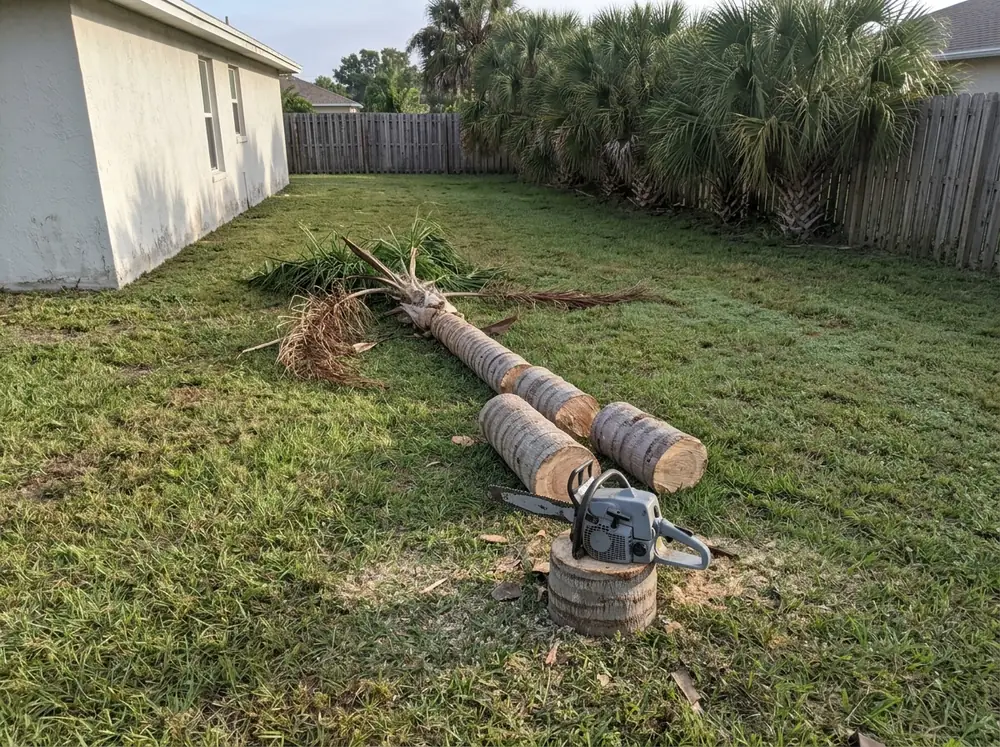
Queen palms come down quickly, with slim trunks and light crowns. They also carry two weak points: UF/IFAS puts queen palm in its lowest wind-resistance group, and the species is a main host of Fusarium wilt, which kills a palm within two to three months of the first symptoms. A queen with stunted, frizzled new fronds may have manganese deficiency instead, which can be treated, so look closely before you pay for removal.
Dead and diseased palms
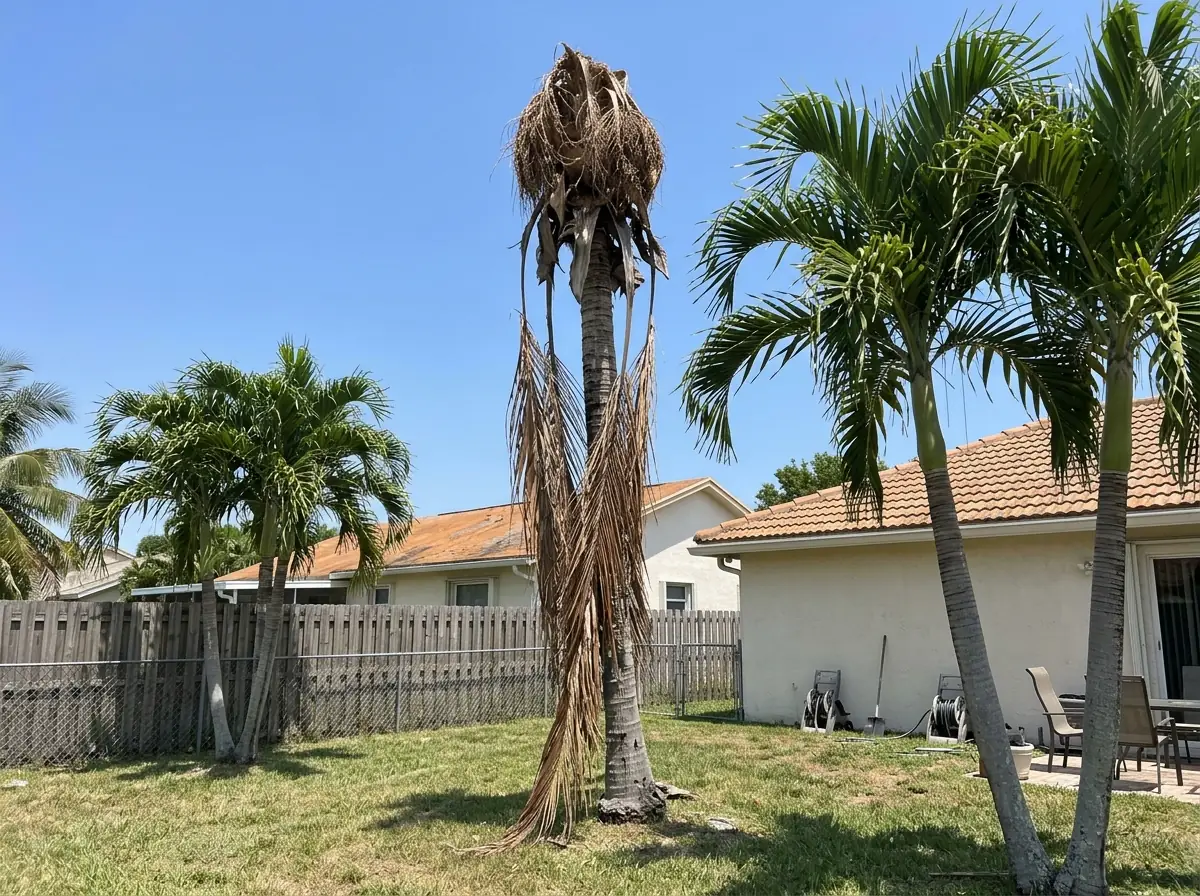
A dead palm is not a "leave it for later" job in Pompano Beach: the City code says no dead tree may remain on developed property. Dead and neglected palms also cost more to remove, since a mat of dead fronds and soft, decayed wood slow the work and add risk. Ganoderma butt rot and lethal bronzing both end in removal; palm tree disease treatment explains how to tell them apart from problems you can fix.
Palm stumps and root balls
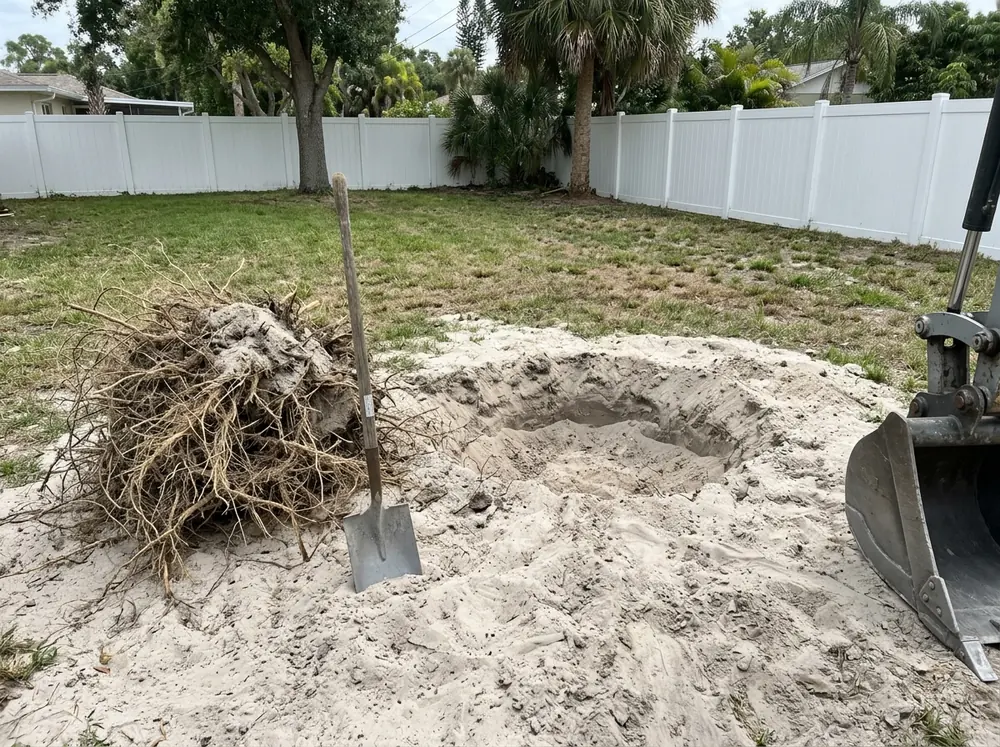
A palm root ball is a dense mat of thin roots, not a few thick anchors, and it spreads sideways in the top one to three feet of sand. Grinding the stump is the quick fix. Digging the whole root ball out makes sense when you're planting in the same spot or when Ganoderma killed the palm, since UF/IFAS advises removing as much stump and root as possible in that case. Grinding prices for other stumps are on the stump grinding page.
Why Pompano Beach homeowners call Pompano Beach Tree Care
- One independent local tree crew per request
- Price, cleanup and haul-away in writing first
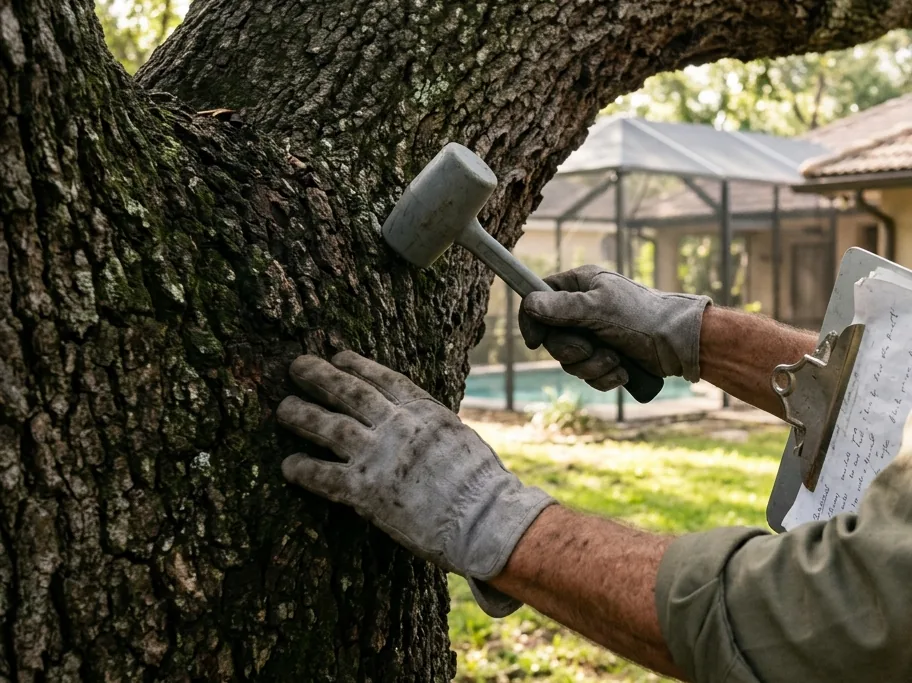
- Ask for insurance proof and an ISA arborist
- Free to call; you pay the crew only for work you OK
What Changes a Palm Removal Quote
Height
Cost guides step up by height band: about $100 to $200 under 15 feet, rising past $700 once a palm tops 80 feet.Condition
A tangle of dead fronds or a soft, rotting trunk adds labor, and cost guides price neglected palms higher.What's underneath
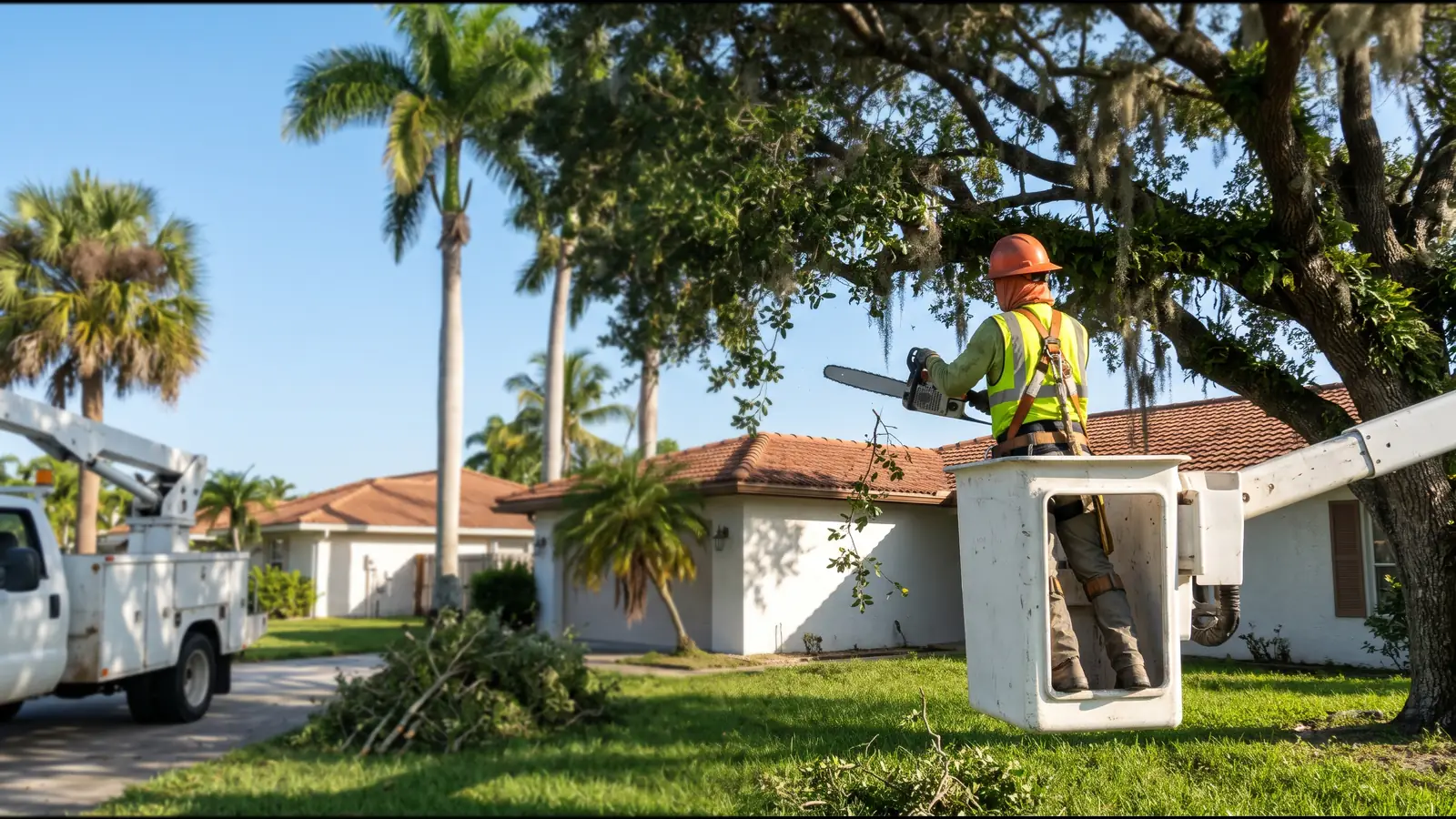
A pool cage, roof or power drop under the crown means every piece gets lowered on a rope. Palms of 60 to 80 feet usually need a lift, bucket truck or crane.Haul-away
Hauling and disposing of palm wood averages about $200 to $300 when it isn't already in the price. Ask whether it is.The stump
Removal quotes often leave it out. Get grinding or root removal written in as its own line.
Before the Palm Comes Down
A single-family owner-occupied lot usually needs no City permit. Condos, rentals and businesses do need one; the rule and fees are on the tree removal page. Ask the contractor for proof of insurance before anyone climbs.
See palm tree relocation if the palm is healthy and just in the wrong place.