
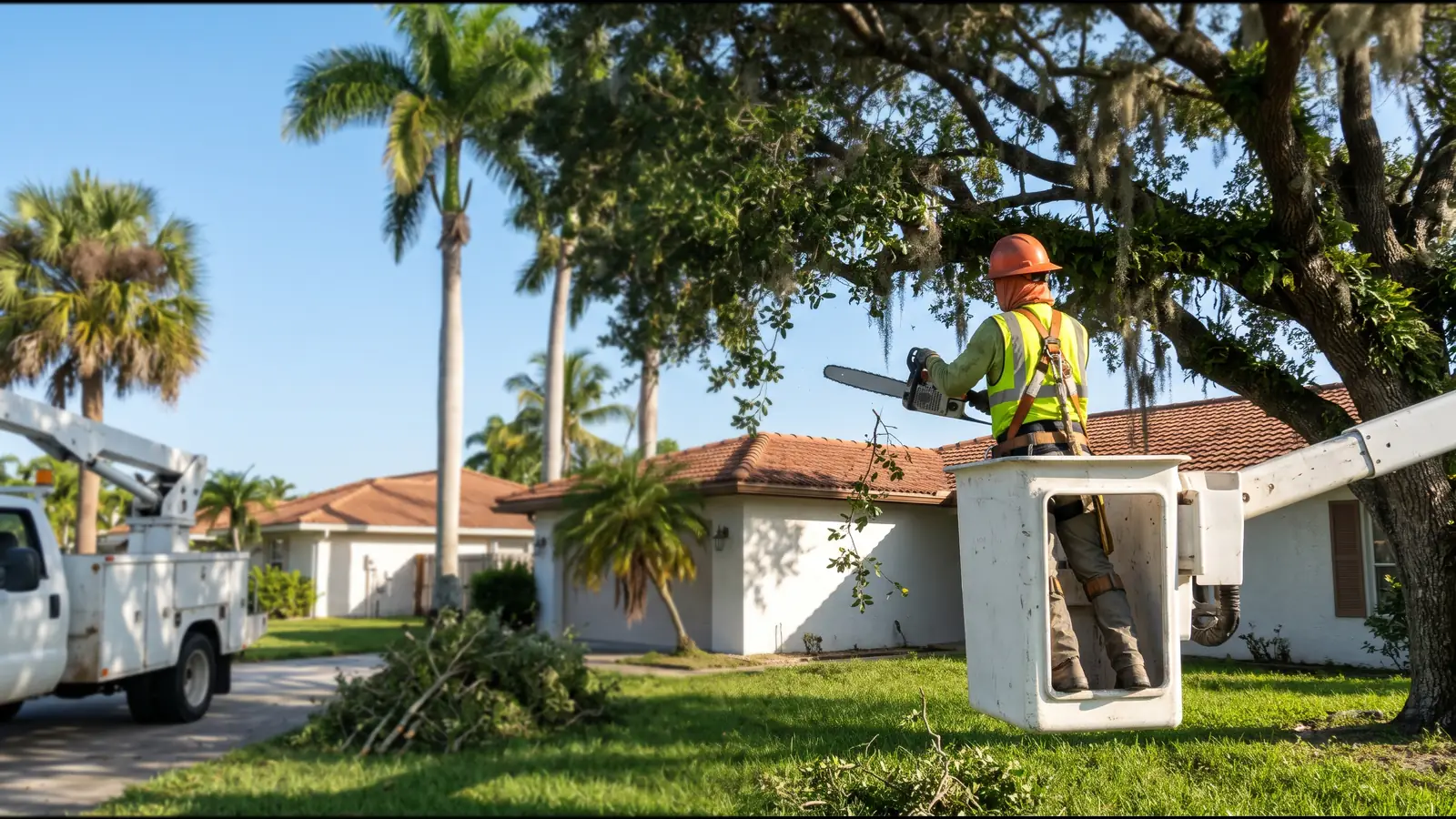
Tree Cabling and Bracing Systems for Weak Unions
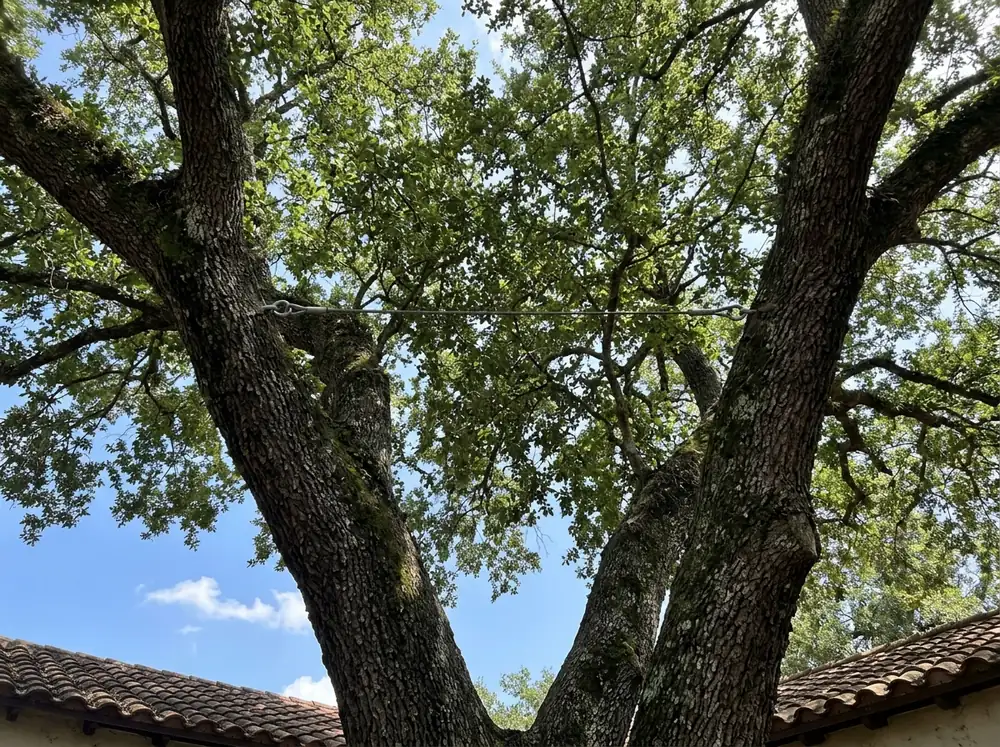
Steel Cabling of Co-dominant Stems
Steel cable is the rigid choice, meant to sharply restrict movement at a union that's already cracking or that has bark trapped in the fork. The cable runs between eye bolts drilled through each stem. The A300 standard describes four layouts, from a single direct cable between two stems to triangular cabling across three, which it prefers when the most support is needed. The trade-off is the drilling, which leaves wounds the tree has to close.
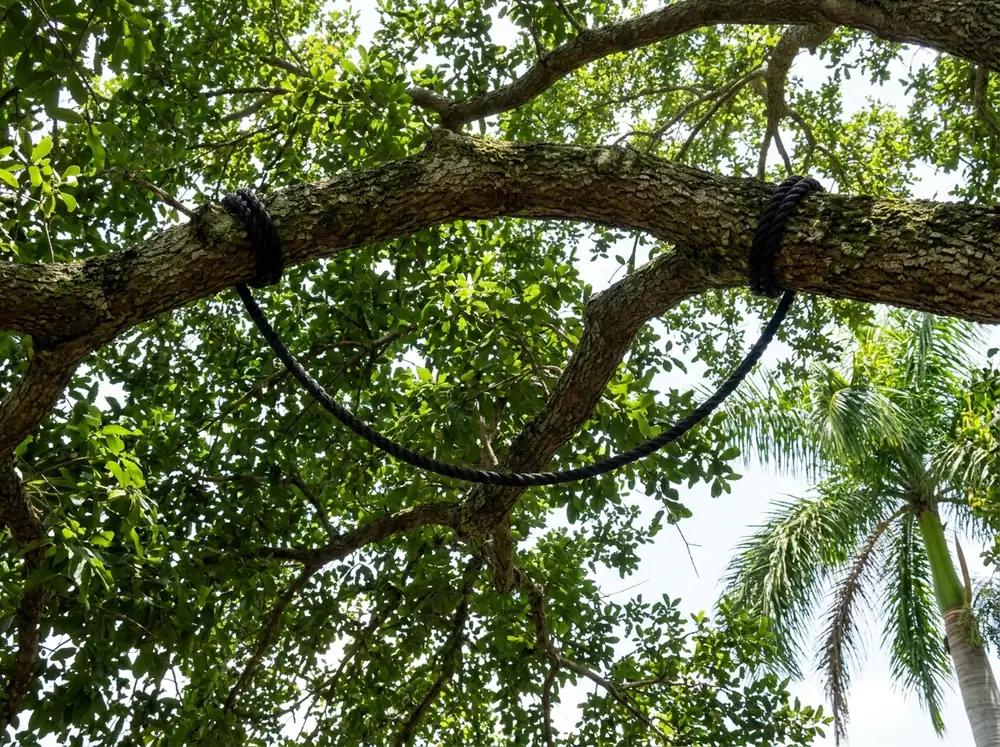
Synthetic (Dynamic) Cabling
Synthetic systems are fitted before a problem shows. The rope lets the limbs sway in ordinary wind and catches them only when a gust pushes them too far. Nothing gets drilled. The catch is upkeep: trade guidance calls for inspections twice a year to check the tension, look for the rope choking a growing limb and watch for sun damage to the fiber.
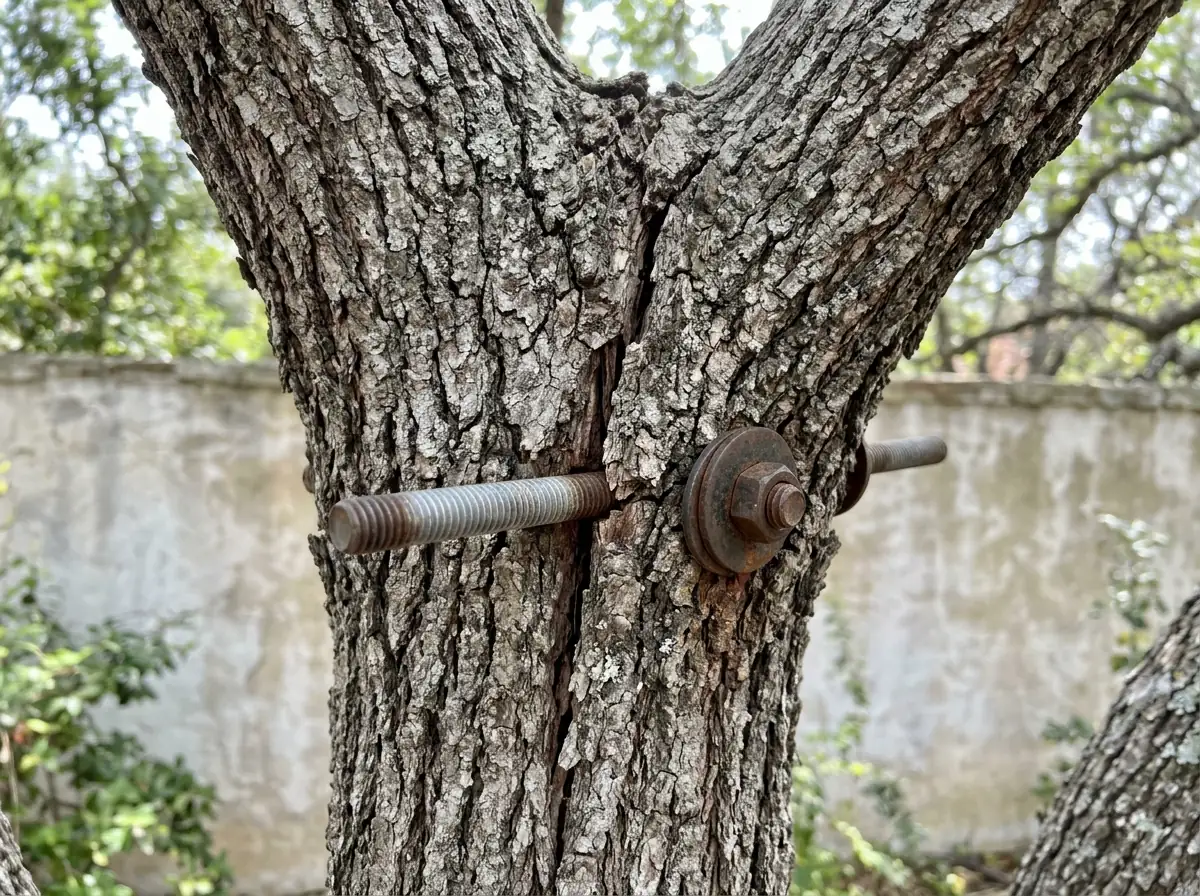
Through-Bolts for Split Trunks
Bracing uses a threaded rod through the wood instead of a cable across the gap. A300 lists both dead-end bracing, anchored inside the wood, and through-bracing, which passes all the way through. UF/IFAS Extension notes that certified arborists bolt or brace codominant stems to keep them from tearing apart in a windstorm. Like steel cable, a rod means drilling, so it's reserved for a fork that needs firm support.
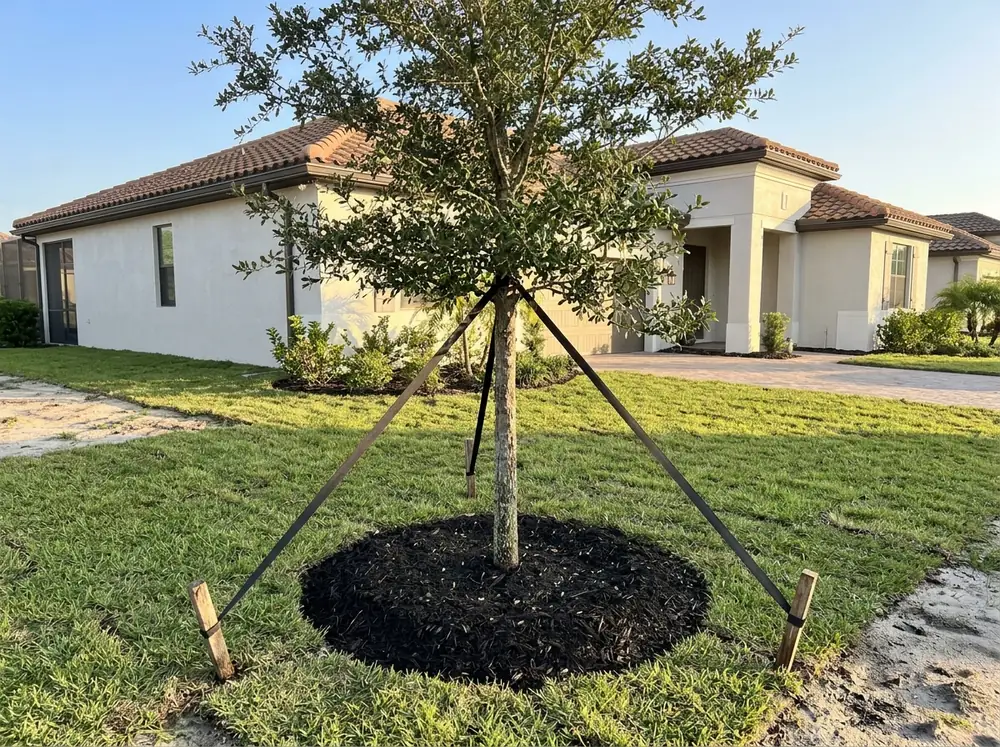
Guying Leaning or Newly Planted Trees
Guying ties a tree to ground anchors or to another tree. For a new planting, UF/IFAS treats it as temporary: adjust the straps so they don't cut into the trunk, and take the system off when it's no longer needed, usually within a year. An established tree that is leaning further month by month is a different matter. UF/IFAS calls that high risk, and it needs a tree risk assessment before anyone talks about guy wires.
Why Pompano Beach homeowners call Pompano Beach Tree Care
- One independent local tree crew per request
- Price, cleanup and haul-away in writing first
- Ask for insurance proof and an ISA arborist
- Free to call; you pay the crew only for work you OK
When Cabling and Bracing Is the Right Call
UF/IFAS lists two or more trunks among the traits of a tree that does badly in storms, next to a decayed trunk and shallow roots. Hardware deals with only the first of those.
Young tree, tight fork
Prune it out instead. UF/IFAS says a codominant stem caught early can be removed, which costs less than any cable and lasts.Mature tree, sound wood
This is where cabling fits: a large oak or mahogany over a house, healthy apart from one weak union.Union already cracking
Trade guidance points to rigid steel for a union that shows cracks or splits. Don't wait on it.Decay at the union or trunk
Hardware can't fix rot. Ask for an assessment before you pay for cables.Before storm season
Book the work well ahead of the peak; hurricane tree trimming has the dates.
Looking After a Cabled Tree
A cable that was placed right years ago can end up too low as the crown grows past it. TCIA advises updating a system when the cables are no longer about two-thirds of the way up. Under A300, the tree owner is responsible for scheduling inspections, so put a reminder on the calendar.
Ask what system you're getting
Steel or synthetic, direct or triangular, and why.Ask about pruning at the same visit
UF/IFAS describes subordination: one stem is cut back in stages over a few years so the other takes the lead.Ask for the inspection interval in writing
Then the next check doesn't depend on anyone's memory.
See tree trimming for the pruning that often goes with a cable.